
AI Agents in the Enterprise: Moving From Chatbots to Autonomous Workflows
I remember the first wave of enterprise chatbots rather vividly. They were introduced with considerable enthusiasm and, in most cases, quietly retired some time later. They could answer a narrow set of questions, provided the user phrased them in precisely the expected way. Anything outside their script produced a polite apology and a link to the service desk.
The AI agents now emerging are a fundamentally different proposition. Understanding that difference is essential for any organization planning its next phase of automation.
From Answering to Acting
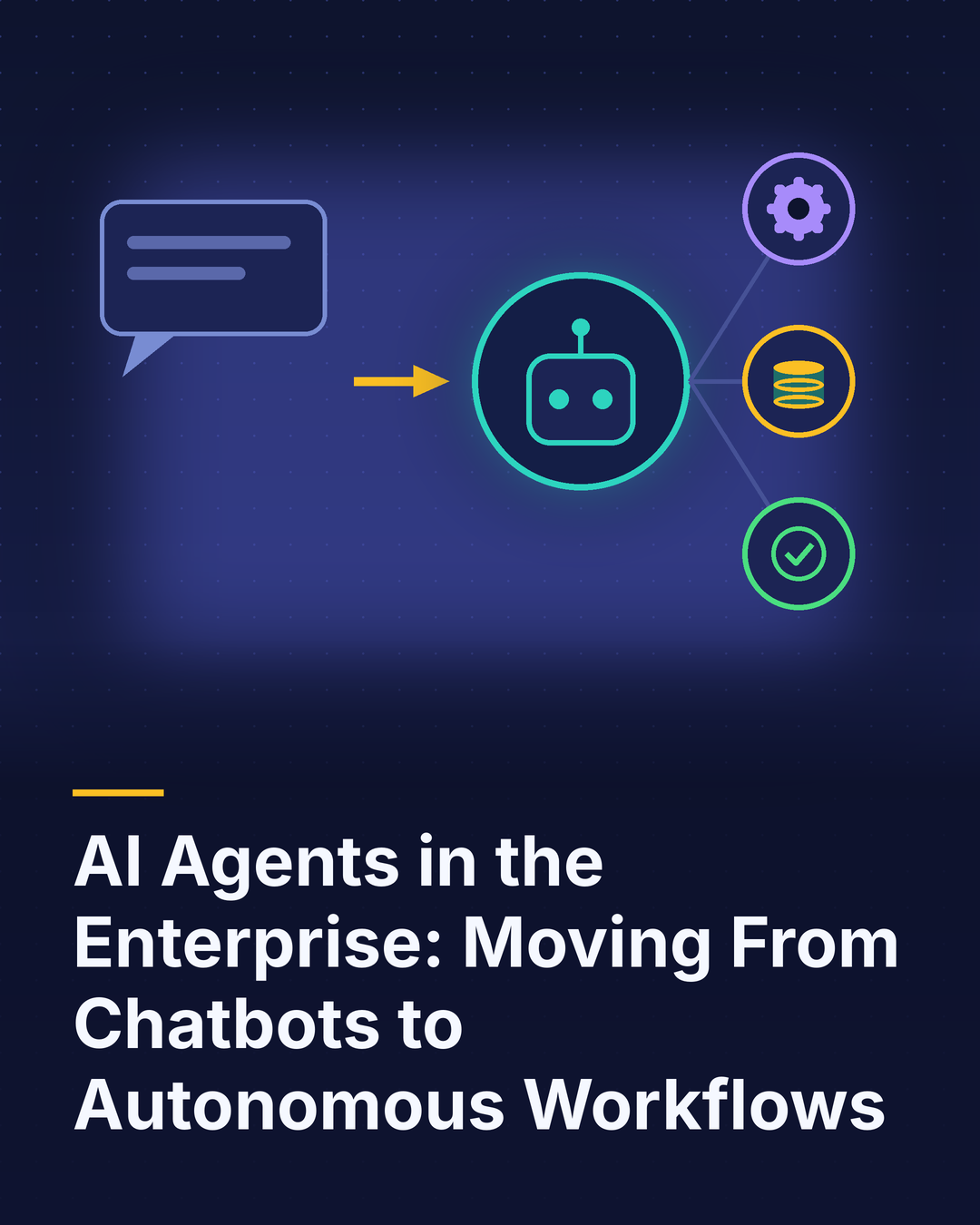
A chatbot responds. An agent acts. Modern AI agents, built on large language models, can interpret a goal expressed in natural language, break it into steps, retrieve the information they need, use enterprise tools and systems to carry out actions, and adjust their approach based on the results.
Consider an employee who reports that a colleague cannot access a project folder. A chatbot might return an article about access requests. An agent could identify the folder, check the colleague’s current permissions, confirm the appropriate approval with the folder owner, grant access and notify both parties, all within a single conversation.
Where Agents Fit in Enterprise Workflows
Agents are particularly well suited to work that involves gathering information from several sources, applying judgment within defined rules and executing a sequence of actions. Promising areas include:
- IT operations: investigating incidents, correlating alerts and executing approved remediation steps
- Employee service: resolving common requests across IT, human resources and facilities
- Customer service: researching cases, proposing resolutions and completing routine fulfillment
- Security operations: triaging alerts and gathering investigation context
Why Workflow Foundations Matter
In my view, the single most important determinant of agent success is not the sophistication of the underlying model but the quality of the workflows and data it can draw upon. An agent can act reliably only when processes are clearly defined, systems are accessible through well-governed interfaces and data is accurate. Organizations that have already invested in a unified workflow platform will find themselves considerably better prepared than those whose processes live in email and spreadsheets.
Governing Autonomy
Autonomy must be granted progressively. Agents should begin by recommending actions for human approval, then be permitted to act independently on low-risk tasks as confidence grows. Every action should be logged and auditable. Agents should operate with the minimum permissions necessary, and clear escalation paths should exist for situations outside their competence. As the number of agents grows, organizations will also need central oversight of what each agent does, which systems it can access and how it performs.
The Bottom Line
AI agents represent a genuine advance beyond the chatbots of the past, capable of completing work rather than merely answering questions. Their success depends on strong workflow foundations, trusted data and careful governance of autonomy. Organizations that prepare these foundations now will be able to deploy agents with confidence as the technology matures. Having watched several waves of enterprise technology arrive with great promise, I believe this one is different, but only for those who do the unglamorous preparatory work first.