
Ask Your Data: How Natural Language Is Changing Business Intelligence
The promise of “self-service analytics” has been made many times over the past two decades. Each generation of business intelligence tools claimed it would free business users from dependence on analysts and IT. In practice, most organizations ended up with a small number of skilled report builders and a large population of users who consumed dashboards but rarely created their own analysis.
The reason was not a lack of interest. It was that asking a new question of the data still required knowledge of the data model, a query language or a complex reporting interface.
Natural language interfaces, powered by large language models, are beginning to remove that barrier in a meaningful way.
What has changed
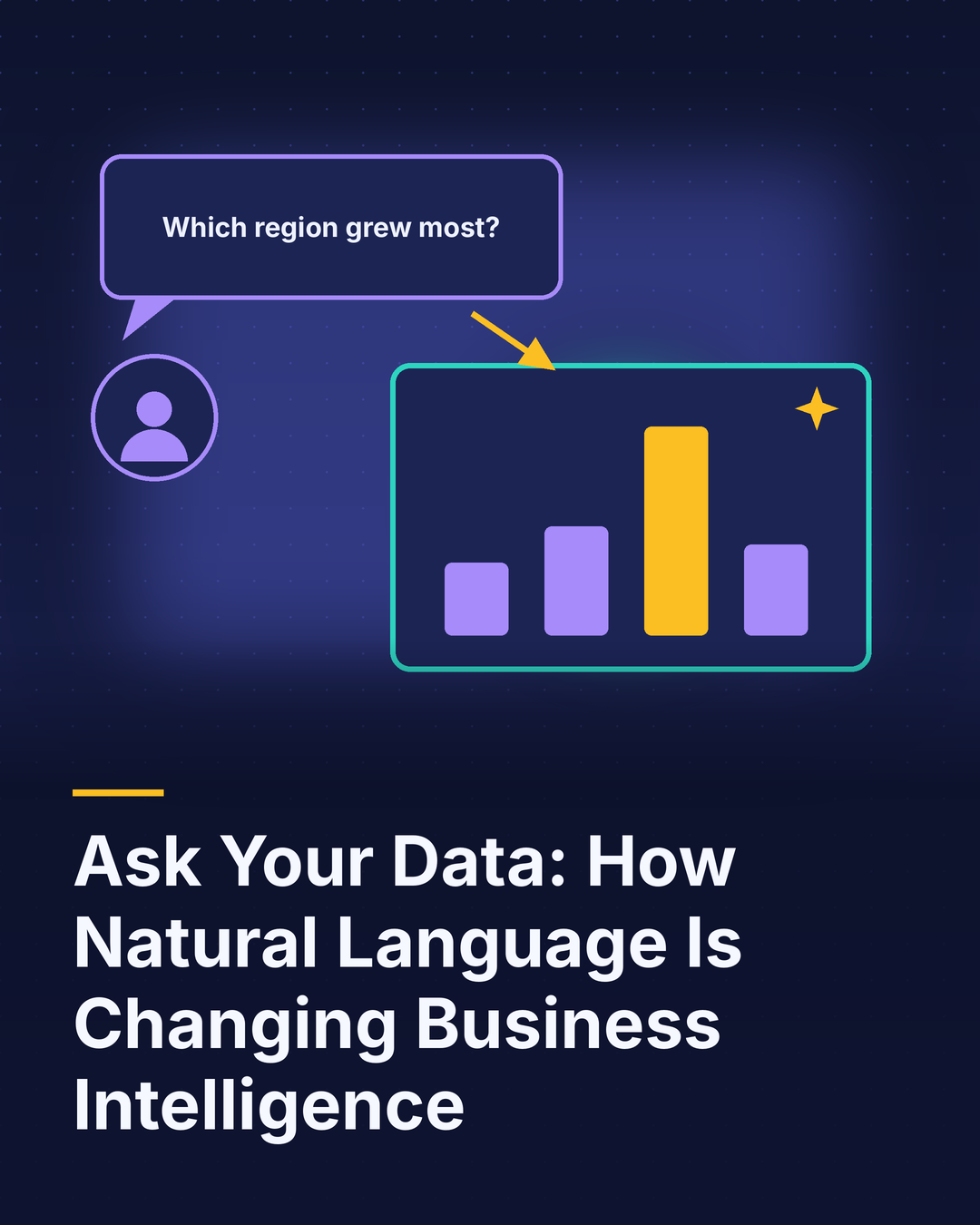
A user can now type or speak a question such as “How did gross margin in the Northeast compare with last quarter, and which product lines drove the change?” The system interprets the question, generates the appropriate query against governed data, returns the result and, increasingly, explains the findings in plain language with a suitable chart.
Follow-up questions can be asked conversationally, refining the analysis without starting again. Some platforms also surface notable trends and anomalies proactively, rather than waiting for a question.
Why the semantic layer is essential
There is an important caveat. A language model asked to query raw tables without context will frequently produce plausible but incorrect results. It may misunderstand which table holds the authoritative figures, or calculate a metric differently from the finance department.
The remedy is a well-maintained semantic layer: a governed definition of business entities, relationships and metrics that the AI uses to construct its queries. When “revenue” or “active customer” is defined once and applied consistently, natural language answers become trustworthy. Without it, they are merely confident.
Implementing it responsibly
A sensible starting point is a well-understood domain, such as sales or operations, where definitions are already agreed. Validate answers against existing reports before broad release. Apply the same access controls to conversational queries as to traditional reports, so that users see only the data they are entitled to. And make it easy to inspect the underlying query, which builds confidence among more technical users.
The bottom line
Natural language is making business intelligence genuinely accessible to people who were never going to learn a query language. The technology is impressive, but its reliability depends on disciplined data governance and a sound semantic foundation. Organizations that invest in both will find that far more of their people can explore data independently, leaving skilled analysts free to concentrate on the deeper questions that merit their expertise.