
Bringing AI to Your Data: Why Platform Integration Matters More Than the Model
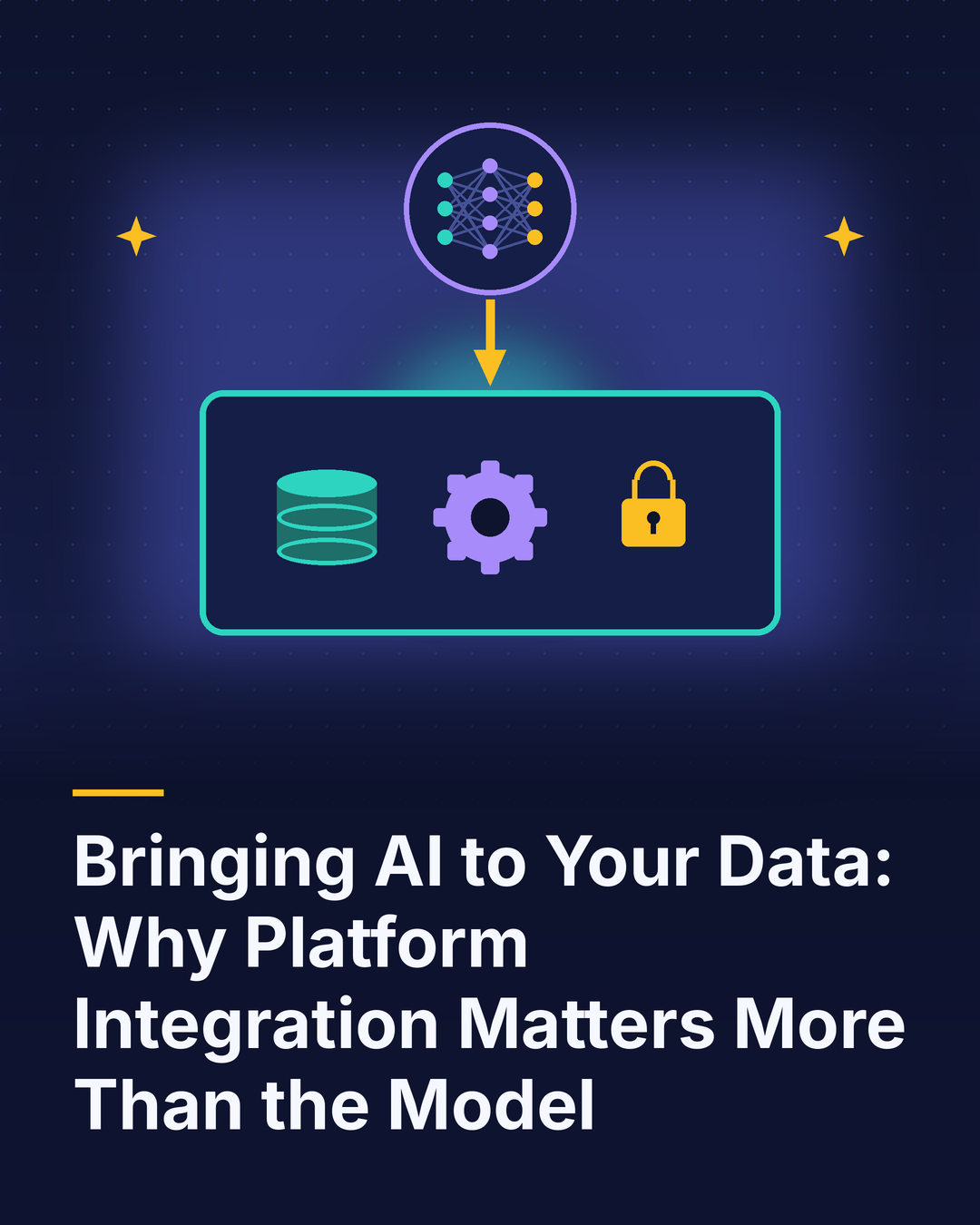
Much of the public conversation about artificial intelligence concerns models: which is largest, which performs best on a given benchmark, which has been released most recently. These are interesting questions, and the pace of progress is genuinely remarkable. In enterprise settings, however, I have come to believe that the model is rarely the decisive factor. What determines whether AI delivers value is how well it is integrated with the organization’s data, workflows and controls.
Why Models Alone Are Insufficient
A general-purpose model, however capable, knows nothing about a particular organization. It does not know the company’s products, customers, policies, systems or history. It cannot see which incidents are open, which assets are affected or which employee is asking the question. Without that context, its answers remain generic and its ability to act is nonexistent.
The value of enterprise AI arises when a capable model is combined with relevant, trusted, current information and the ability to take action within governed processes.
The Case for Bringing AI to the Data
Two broad approaches exist. The first extracts enterprise data and moves it to a separate AI environment. The second embeds AI capabilities within the platform where the data and workflows already reside. The second approach offers several important advantages.
- Context. AI embedded in a workflow platform can access tickets, cases, configuration items, knowledge and user information directly, producing more accurate and relevant results.
- Security. Existing access controls apply automatically, so the AI surfaces only information the user is entitled to see. Data does not need to be copied into additional environments.
- Actionability. The AI can trigger approved workflows, update records and complete tasks, rather than merely offering suggestions.
- Governance. AI actions are recorded in the same audit trails as human actions, simplifying oversight and compliance.
- Currency. The AI works with live data rather than periodic extracts that may already be out of date.
Model Flexibility Still Matters
None of this suggests that model choice is irrelevant. Different tasks benefit from different models, and the landscape will continue to evolve rapidly. A sound architecture abstracts the model behind a stable interface, allowing the organization to adopt better or more economical models over time without rebuilding its applications. Integration and flexibility are complementary rather than competing objectives.
Preparing the Foundation
Organizations seeking to benefit from integrated AI should focus first on data quality, consolidating workflows onto a common platform and establishing consistent access controls. These investments improve operations immediately and prepare the ground for AI.
The Bottom Line
In the enterprise, AI value depends far more on integration with data, workflows and controls than on the choice of model. Bringing AI to where the data already lives provides context, security, actionability and governance that standalone approaches struggle to match. Maintaining flexibility in model choice ensures the organization can benefit from continued innovation. In my experience, the organizations that achieve the strongest results from AI are not those chasing the latest model, but those that have quietly built clean data and well-governed workflows on which any model can perform well.