
BYOD, COPE or Corporate-Owned? Choosing the Right Device Model for Your Workforce
Every organization that relies on mobile devices eventually faces the same question: who should own the phone? The answer affects cost, security, privacy, support and how employees feel about their tools. There’s no universal right choice, but there is a right choice for each type of role.
Three models dominate.
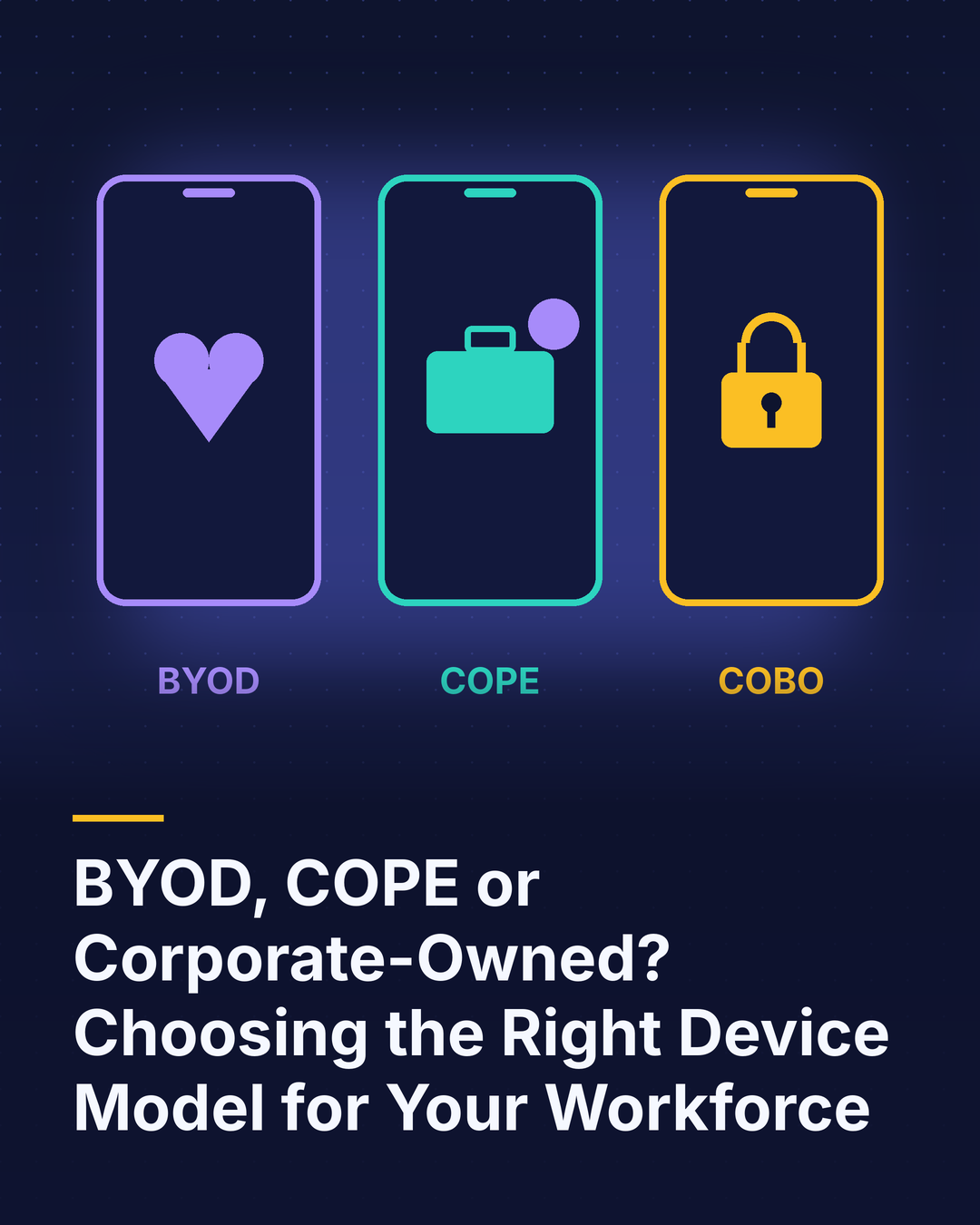
Bring your own device (BYOD). Employees use their personal phones for work, usually with a stipend or partial reimbursement. The company manages only a separate work space on the device.
Corporate-owned, personally enabled (COPE). The company buys and manages the device, but employees are allowed reasonable personal use.
Corporate-owned, business only (COBO). The device is company property used strictly for work, often locked down to specific apps. Shared devices for shift workers typically fall into this category.
How they compare
| BYOD | COPE | COBO | |
|---|---|---|---|
| Upfront hardware cost | Low | Higher | Higher |
| Company control | Limited to work data | Strong | Full |
| Employee privacy concerns | Highest | Moderate | Low |
| Standardization | Low | High | High |
| Best fit | Knowledge workers, contractors | Managers, sales, field staff | Frontline, kiosks, regulated roles |
What usually drives the decision
Data sensitivity is the first filter. Roles handling regulated customer, patient or financial data often justify company-owned devices. Next comes how central the phone is to the job. If an employee can’t work without it, the business has a strong interest in controlling the hardware, its updates and its replacement.
Cost deserves a closer look than it usually gets. BYOD appears cheaper, but stipends, support for many different models and security gaps can erode the savings. Company-owned programs cost more upfront, yet standardized devices with long security update commitments often lower total cost over time.
Finally, consider the employee. Some people dislike carrying two phones. Others don’t want their employer anywhere near their personal device. Modern work profile technology narrows the gap by keeping business apps and data separate from personal ones on the same phone.
Most companies mix models
In practice, many organizations use more than one approach: BYOD for office staff, COPE for sales and managers, and dedicated corporate devices for frontline teams. What matters is a clear policy for each group and consistent management behind all of them.
The bottom line
Choosing a device ownership model is really a decision about risk, cost and employee experience. Match the model to the role, set clear policies and manage every device type consistently. Revisit the decision as roles change and new capabilities arrive. A model that made sense three years ago may no longer fit a workforce that relies on mobile for nearly everything.