
Cloud Migration Done Right: Assess, Prioritize and Move With Confidence
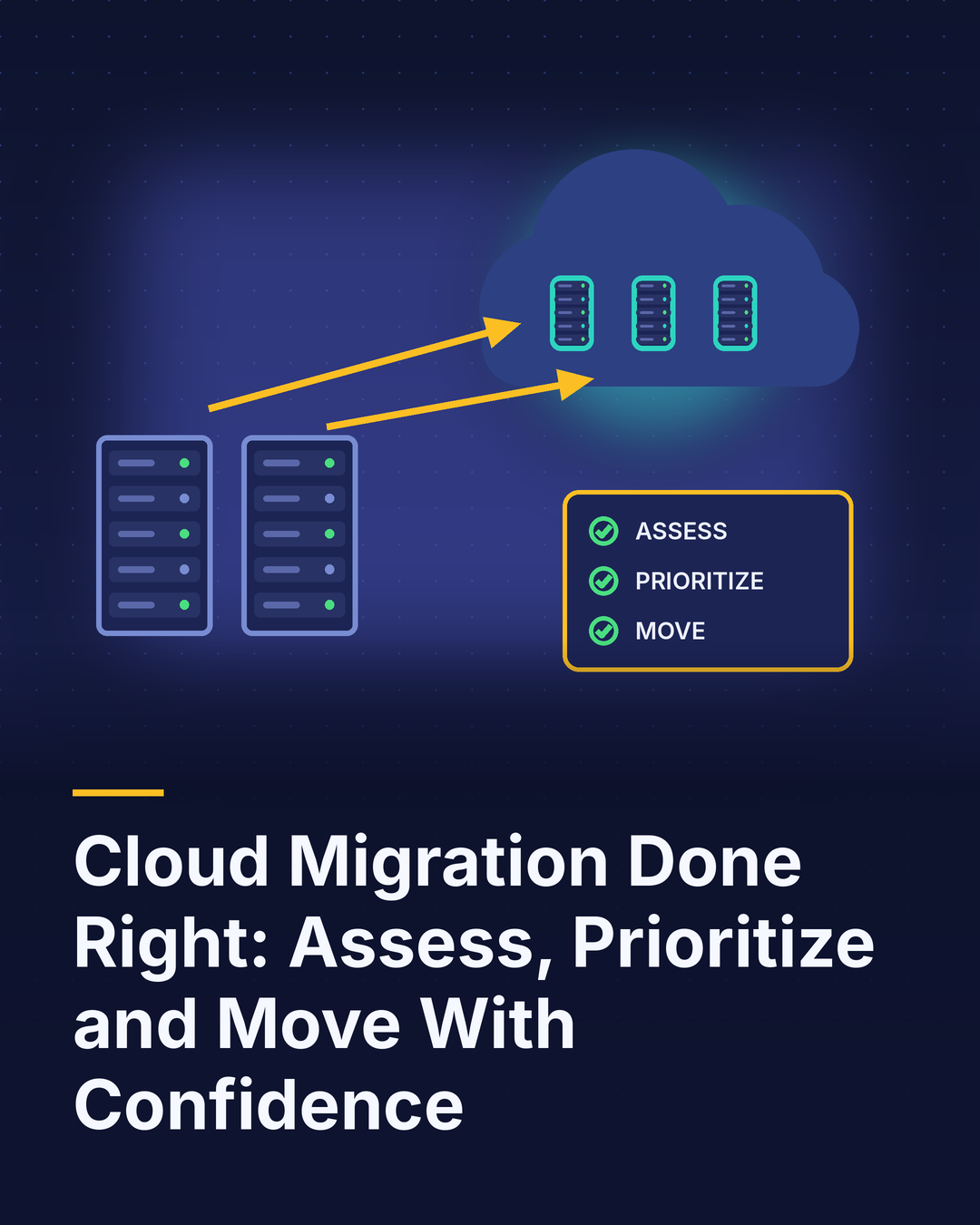
Cloud migration is no longer a novel undertaking. Most large organizations have moved at least part of their estate, and a considerable body of experience has accumulated about what works and what does not. Yet migrations still frequently exceed their budgets, extend beyond their timelines or fail to deliver the expected benefits.
In my observation, these disappointments rarely stem from the cloud platform itself. They arise from insufficient preparation, unclear objectives and an underestimation of the organizational change involved.
Begin with objectives
Before any workload moves, leadership should be explicit about why the migration is being undertaken. Is the primary goal to exit a data center before a lease expires? To reduce infrastructure costs? To improve resilience? To enable analytics and AI? To accelerate software delivery? Each objective implies different priorities and different migration approaches. A program designed to vacate a facility quickly will look very different from one intended to modernize applications.
Assess thoroughly
A rigorous assessment of the current estate is essential. This includes an inventory of applications and infrastructure, an understanding of dependencies between systems, utilization data to inform rightsizing, licensing constraints, and security and compliance requirements. Automated discovery tools can map much of this, but conversations with application owners remain indispensable. Undocumented dependencies are among the most common causes of migration failures.
The assessment should also produce a realistic total cost of ownership comparison, one that includes not only infrastructure but also operational effort, licensing and the cost of the migration itself.
Prioritize deliberately
Not all workloads should move at once, nor in the same manner. A sensible sequence typically begins with lower-risk applications that build team experience and confidence, while delivering early savings. More complex, business-critical systems follow once the processes, landing zone and skills have matured.
For each application, the team should select an appropriate strategy, whether rehosting as-is, replatforming onto managed services or refactoring for cloud-native operation, based on business value and technical fit.
Build the foundation first
A well-designed landing zone, which establishes identity, networking, security controls, governance policies and cost management before workloads arrive, prevents a great deal of rework. It is far easier to build guardrails at the outset than to impose them on a sprawling environment later.
Plan for the people
Migration changes how operations, security and finance teams work. Training, revised processes and clear ownership in the new environment are as important as the technical cutover. Early engagement with the finance function, in particular, avoids unpleasant surprises when the operating model shifts from capital to operational expenditure.
Validate and optimize
Each migration wave should be tested carefully, with rollback plans prepared. After cutover, workloads should be rightsized, and the expected benefits measured against the original objectives.
The bottom line
Successful cloud migration is primarily an exercise in planning and discipline. Clear objectives, thorough assessment, careful prioritization and a sound foundation allow organizations to move with confidence and realize the benefits they anticipated. I would counsel against treating migration as a destination in itself. It is, more accurately, the beginning of a longer journey of optimization and modernization that continues well after the last server is decommissioned.