
Governing AI Across Enterprise Workflows: Trust, Transparency and Control
As artificial intelligence becomes embedded in enterprise workflows, it begins to influence decisions that affect employees, customers and the business itself. An AI system may route a request, approve a routine transaction, recommend a resolution or act on a system directly. Each of these actions carries consequences. Governance is therefore not an optional addition to AI adoption. It is the condition that allows adoption to scale safely.
Why Workflow AI Requires Particular Attention
AI embedded in workflows differs from standalone AI tools in an important respect: it operates within business processes, often with access to sensitive data and the ability to trigger real actions. An inaccurate answer in a chat interface is unfortunate. An inaccurate action in a provisioning, financial or customer workflow can be costly and difficult to reverse.
The Three Pillars of Effective Governance
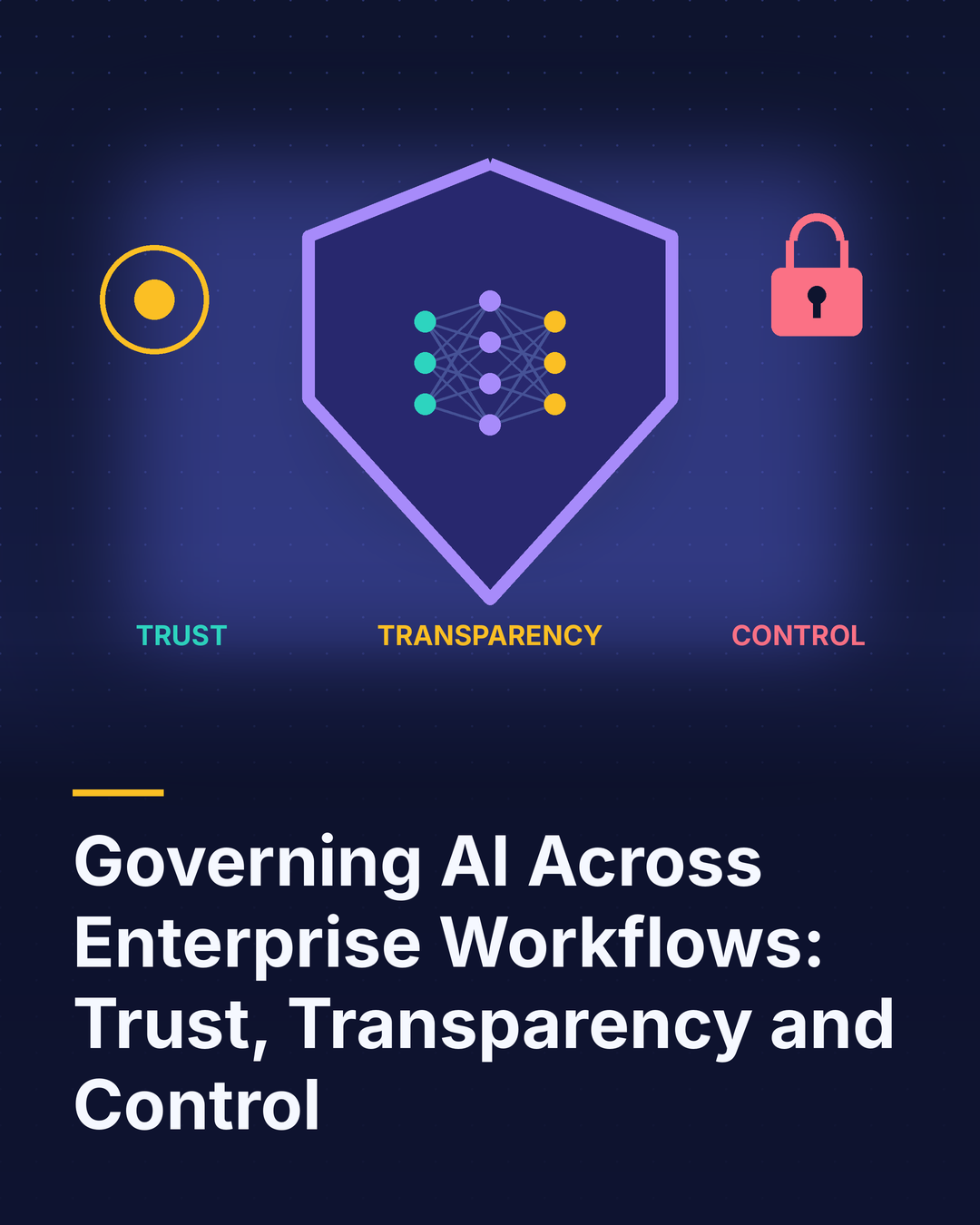
Trust depends on AI performing accurately and consistently. Organizations should evaluate AI capabilities before deployment against representative scenarios, monitor performance continuously in production and ground AI output in verified enterprise data. Clear thresholds should determine when the AI may act independently and when it must defer to a person.
Transparency means that people affected by AI-driven activity can understand what happened and why. Users should know when they are interacting with AI. Decisions and actions should be recorded with sufficient context to be explained to an auditor, a manager or a customer. Model versions, prompts and data sources should be documented.
Control ensures that the organization, rather than the technology, determines what AI may do. This includes role-based permissions limiting which data and systems AI can access, approval requirements for higher-risk actions, the ability to pause or roll back AI capabilities quickly and a clear inventory of all AI systems in use.
Practical Governance Measures
Several practices translate these principles into operation.
- Maintain a central inventory of AI models and agents, with defined owners for each
- Classify AI use cases by risk and apply proportionate review and oversight
- Embed guardrails against prompt injection, data leakage and inappropriate content
- Log every AI-driven action in the same audit trail as human actions
- Review outcomes regularly and refine policies as experience accumulates
Governing AI on the same platform that runs enterprise workflows simplifies these tasks considerably, since permissions, audit trails and approvals already exist there.
The Bottom Line
AI governance built on trust, transparency and control allows organizations to extend AI across enterprise workflows with confidence. Proportionate oversight, comprehensive audit trails and clear limits on AI authority protect the business while still permitting rapid progress. As regulatory expectations continue to develop, organizations with mature governance will be able to adapt quickly. Far from slowing innovation, sound governance is what allows AI to move from carefully contained pilots into the core of how the business operates.