
How AI-Powered Case Summarization Is Changing the Agent Experience
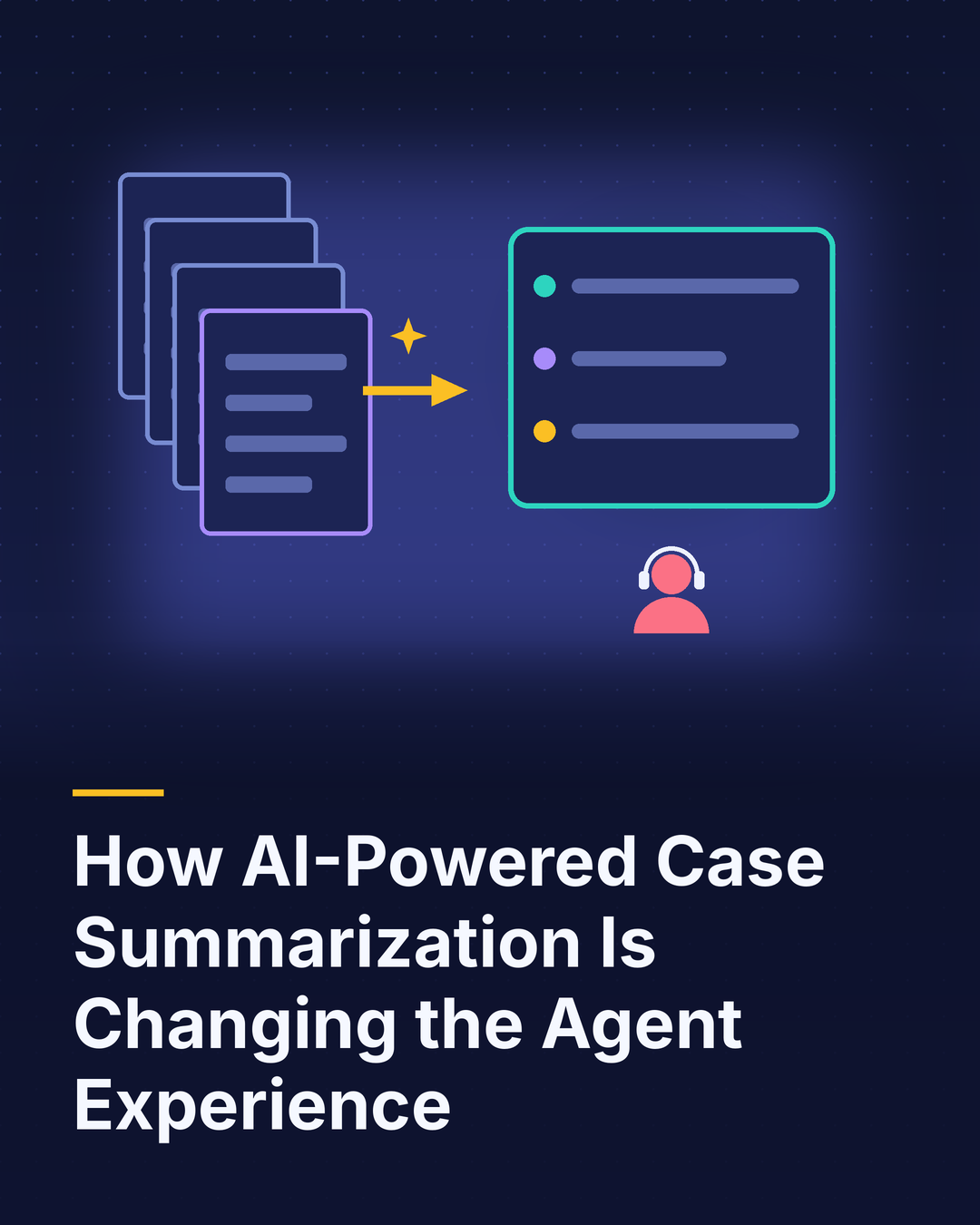
Among the many applications of generative AI in customer and employee service, case summarization may appear one of the more modest. It does not resolve issues autonomously or replace any part of the agent’s role. Yet it addresses a source of friction that agents encounter dozens of times each day, and organizations that have adopted it frequently report that it is among the most appreciated AI capabilities they have deployed.
The Problem Summarization Solves
Complex cases accumulate history. A single case may contain a lengthy chain of customer emails, chat transcripts, internal notes, reassignments, attachments and status changes. When the case moves to a new agent, is escalated to a specialist or returns after a period of inactivity, someone must read through that history to understand what has happened.
This reading takes time, often several minutes for a complex case. Important details are easily missed, which may lead the agent to ask the customer to repeat information they have already provided, an experience customers find particularly frustrating.
What AI Summarization Provides
Generative AI can read the full case record and produce a concise summary covering the customer’s issue, the actions taken so far, the current status and any outstanding commitments. Summaries can be generated at several points in the case lifecycle.
- On handoff or escalation, so the receiving agent understands the situation immediately
- At case closure, producing resolution notes that would otherwise be written manually
- For supervisors, who can review escalated or at-risk cases quickly
- After customer interactions, capturing the key points of a call or chat for the record
The Benefits for Agents and Customers
Agents save time on reading and writing, allowing them to concentrate on resolving the issue. Handoffs become smoother, and customers are less likely to repeat themselves. Documentation becomes more consistent in quality, which improves the value of case data for reporting and analysis. Over time, well-structured resolution summaries can also be used to create knowledge articles.
Ensuring Accuracy
Agents should review summaries before they become part of the permanent record, at least initially. Summaries should draw only on the case data itself, and organizations should monitor accuracy through periodic sampling. Sensitive information must be handled in accordance with existing access and privacy controls.
The Bottom Line
AI-powered case summarization addresses a persistent, everyday source of friction for service agents, saving time on reading and documentation while improving handoffs and consistency. It is a practical, low-risk application of generative AI that delivers noticeable benefits quickly. For many organizations, it also serves as an effective introduction to AI for their service teams, building the familiarity and trust that more ambitious capabilities will later require.