
How Case Management Automation Frees Agents to Focus on Complex Issues
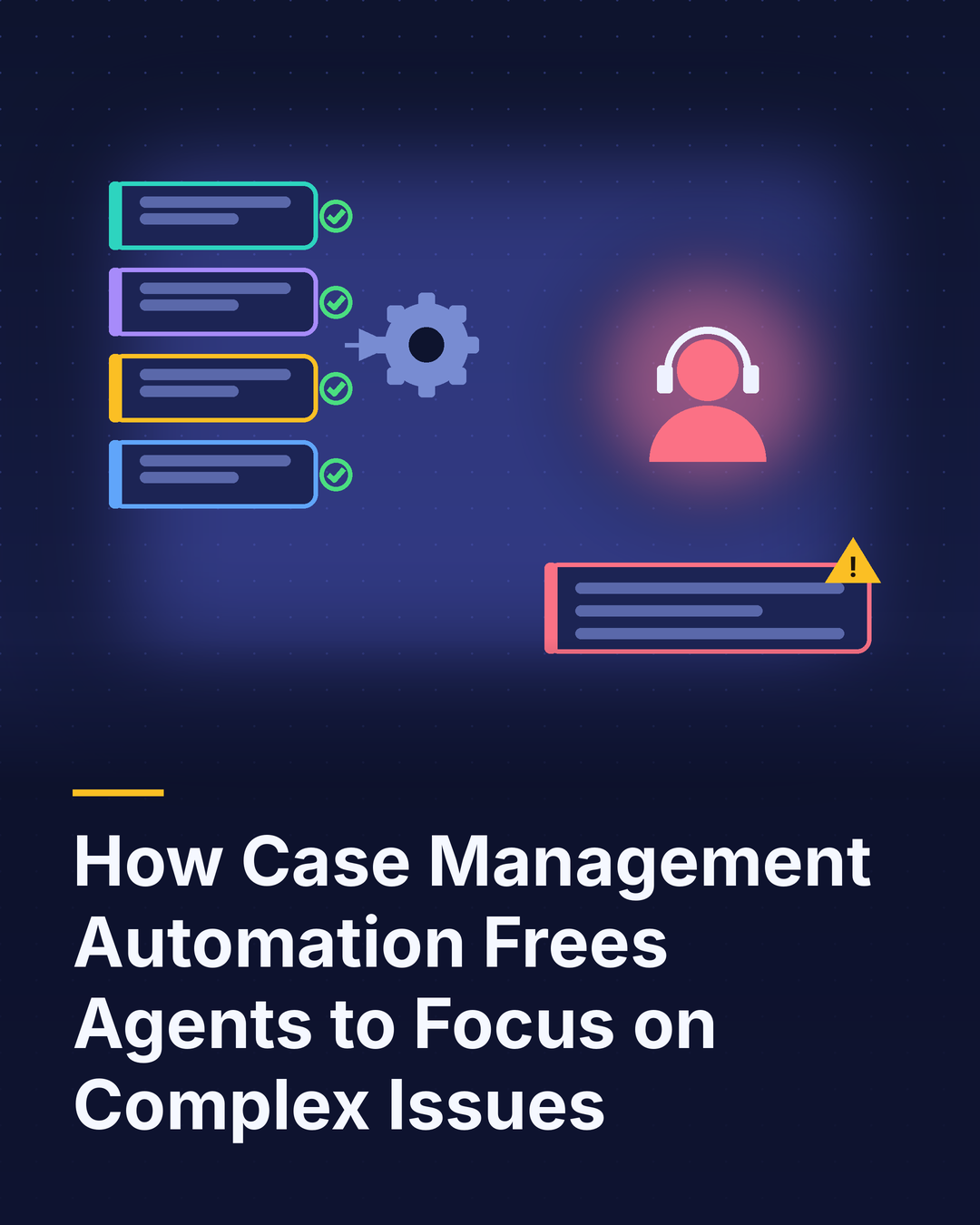
Customer service agents spend a surprising proportion of their working day on tasks that require little judgment. They categorize incoming cases, search for customer information across several systems, copy details between applications, write routine updates and complete wrap-up notes. These activities are necessary, but they consume time that could be devoted to the complex, sensitive or high-value issues where human skill makes the greatest difference.
Case management automation addresses this imbalance directly.
Where Automation Adds Value
Automation can support agents at nearly every stage of the case lifecycle.
- Intake and classification. Incoming requests from email, chat, web forms and social channels can be categorized and prioritized automatically based on their content, the customer’s profile and their history.
- Routing. Cases can be assigned to the agent or team best equipped to handle them, considering skills, workload and service-level commitments.
- Information gathering. Relevant customer, order, product and asset data can be assembled automatically and presented in a single view.
- Routine resolution. Straightforward requests, such as address changes, order status inquiries or standard refunds within defined limits, can be resolved end to end without agent involvement.
- Documentation. AI can draft case summaries, wrap-up notes and customer responses for the agent to review and approve.
- Follow-up. Workflows can monitor progress, send customer updates and escalate cases that risk breaching service levels.
The Effect on Agents
When routine work is automated, the nature of the agent role changes. Agents spend more time on issues requiring empathy, investigation and judgment, such as complaints, complex technical problems and situations where a customer relationship is at risk. This work is generally more satisfying, and organizations frequently report improvements in agent engagement and retention alongside gains in productivity.
It is important, however, to prepare agents for this change. Their remaining caseload will be more demanding on average, which calls for additional training, better knowledge resources and appropriate support.
Maintaining Quality and Control
Automated resolutions must be governed carefully. Clear rules define which cases may be resolved automatically, and regular reviews confirm that outcomes remain accurate and appropriate. Customers should always have a straightforward path to a human agent when automation does not meet their needs.
The Bottom Line
Case management automation removes much of the repetitive work that occupies customer service agents, from classification and routing to documentation and routine resolution. The result is faster service for customers and more meaningful work for agents, who can concentrate on the complex issues where they add the most value. Thoughtful governance ensures that efficiency does not come at the expense of quality, and that customers who need a person can always reach one.