
Intelligent Routing: Using AI to Match Every Request With the Right Resolver
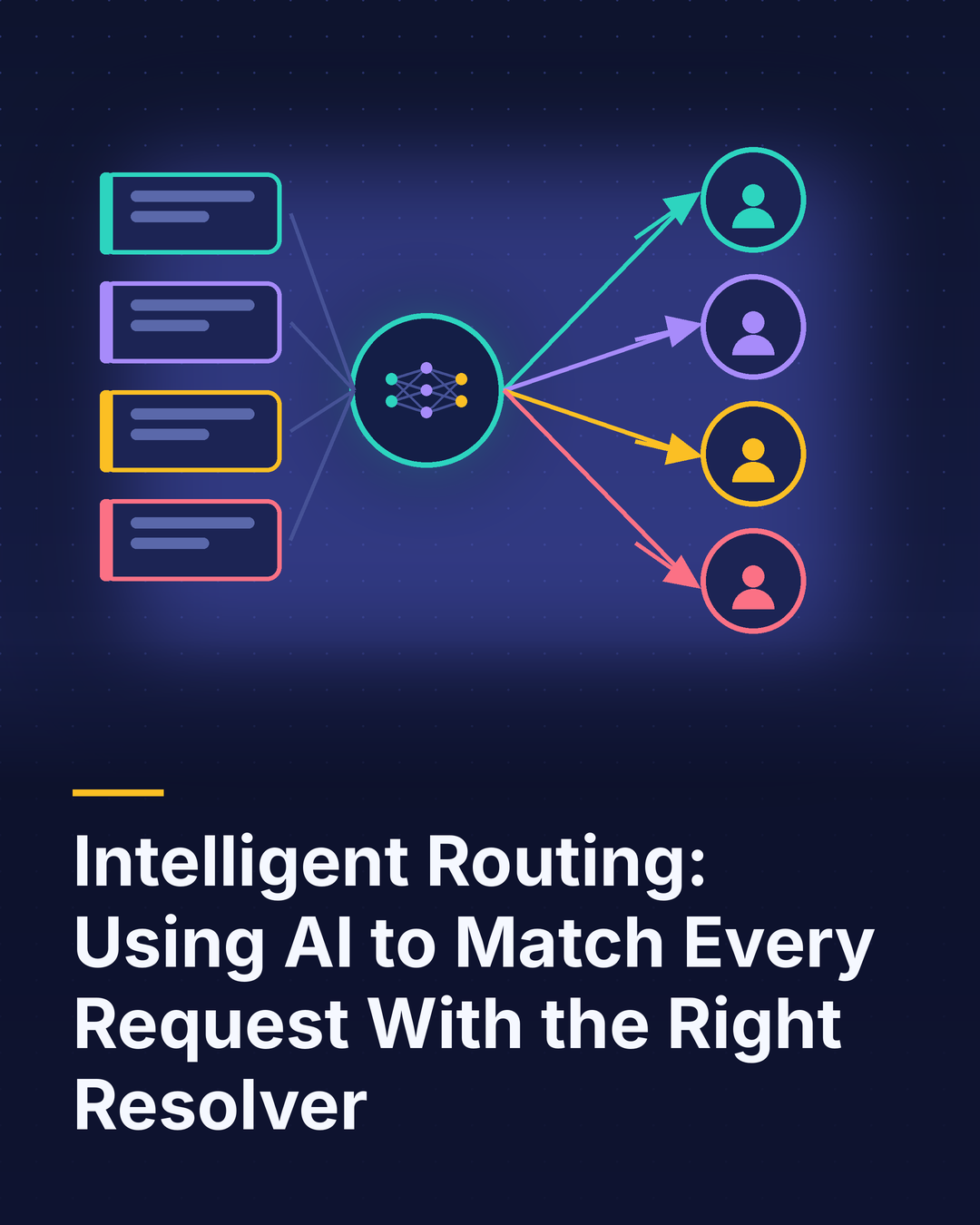
In any service organization, a request that reaches the wrong team first is a request that will take longer to resolve. It waits in a queue, is examined by someone who cannot help, and is reassigned, sometimes several times, before reaching a person with the right skills. Each reassignment adds delay, consumes effort and frustrates the requester. Analysis of service data frequently reveals that a substantial share of tickets are reassigned at least once.
Intelligent routing uses artificial intelligence to address this problem at its source.
The Limits of Traditional Routing
Conventional routing relies on the requester selecting the correct category or on rules that assign work based on fixed criteria. Both approaches have weaknesses. Requesters frequently choose an incorrect or generic category, particularly when the list is long or uses unfamiliar terminology. Rules require constant maintenance and struggle with requests that do not fit neatly into predefined categories.
How AI Improves Routing
AI-based routing analyzes the content of each request, together with historical data about how similar requests were resolved, to determine the most appropriate assignment. Several capabilities contribute.
- Natural language understanding interprets the request as written, regardless of the category selected.
- Learning from history identifies which teams have successfully resolved similar requests in the past.
- Contextual data such as the affected service, configuration item, location or customer tier refines the assignment.
- Skills and workload awareness directs work to the individual best suited to resolve it, while balancing demand across the team.
- Priority prediction identifies urgent or high-impact requests that require immediate attention.
Measuring the Impact
Organizations implementing intelligent routing typically monitor reassignment rates, time to first assignment, mean time to resolution and the accuracy of predicted categories. Improvements in these measures translate directly into faster service and recovered capacity.
Implementation Considerations
Routing models depend on the quality of historical data. If past tickets were frequently misclassified or closed with inaccurate resolution information, the model will learn from those errors. A period of data cleansing is often worthwhile. It is also advisable to begin by presenting AI recommendations to human dispatchers before enabling fully automatic assignment, and to review performance regularly as services and teams change.
The Bottom Line
Intelligent routing reduces reassignments and delays by matching each request with the right resolver from the outset. By interpreting requests in natural language and learning from historical resolutions, AI overcomes the limitations of manual categorization and static rules. The resulting gains in speed and efficiency are often substantial, and they accumulate across every request the organization handles, making routing one of the most valuable early applications of AI in service operations.