
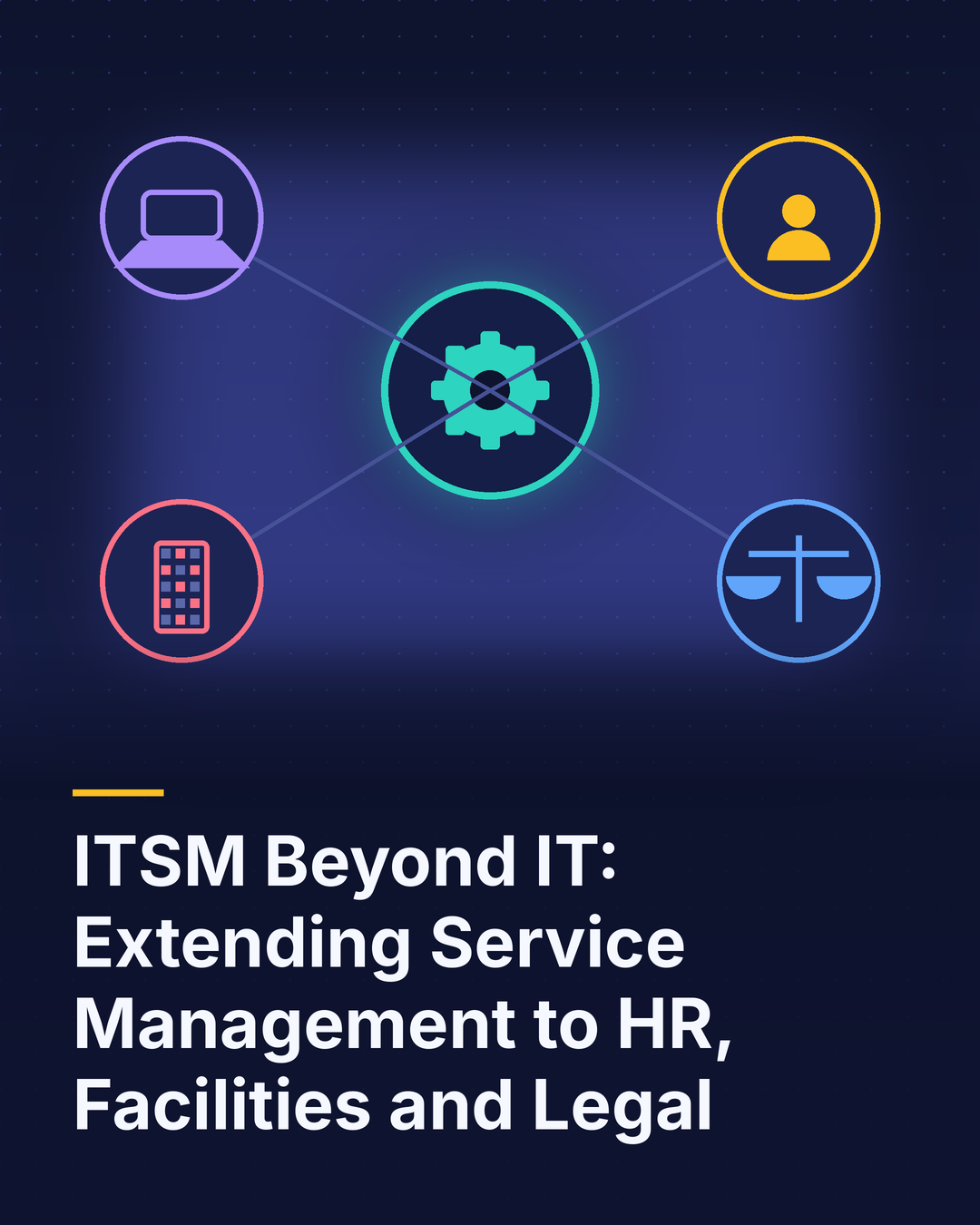
ITSM Beyond IT: Extending Service Management to HR, Facilities and Legal
IT service management was developed to bring order to the delivery of technology services. Over several decades, IT departments refined practices for handling requests, tracking work against service levels, managing knowledge and measuring performance. It has always struck me as curious that these disciplines remained confined to IT for so long, when other departments face very similar challenges.
Human resources answers questions about benefits and policies. Facilities handles maintenance requests and workspace moves. Legal reviews contracts and responds to queries from across the business. Each function receives a steady stream of requests, often through email and telephone, with limited visibility into volume, response times or recurring issues.
Why the ITSM Model Translates Well
The core concepts of service management apply naturally to any function that serves internal customers.
- A service catalog defines what the department offers and how to request it.
- Case and request management tracks each item from submission to resolution.
- Service-level targets set clear expectations for response and completion.
- Knowledge management allows employees to find answers themselves.
- Reporting reveals demand patterns, bottlenecks and opportunities for improvement.
Department-Specific Opportunities
Human resources can offer an employee portal for policy questions, document requests and life events, while handling sensitive cases with appropriate confidentiality controls.
Facilities can manage maintenance requests, space reservations and moves through a single workflow, with mobile access for technicians in the field.
Legal can triage contract reviews and advisory requests by type and urgency, ensuring that routine matters are handled efficiently and complex ones reach the right specialist.
The Value of a Shared Platform
The greatest benefit arises when these departments share a common platform with IT. Employees then have a single portal for all internal services, and processes that cross departments, such as onboarding or office relocations, can be orchestrated end to end. In my experience, this shared foundation is what transforms enterprise service management from a set of departmental improvements into a genuine change in how the organization operates.
The Bottom Line
The practices that brought structure and transparency to IT service delivery apply equally well to human resources, facilities, legal and other internal functions. Extending service management across the enterprise improves the employee experience, makes demand visible and allows cross-departmental processes to run smoothly. Building on a shared platform multiplies these benefits. Organizations that take this step often find that IT’s long investment in service management becomes one of the most valuable assets the entire business possesses.