
Natural Language Search: Helping Employees Find Answers Without Opening a Ticket
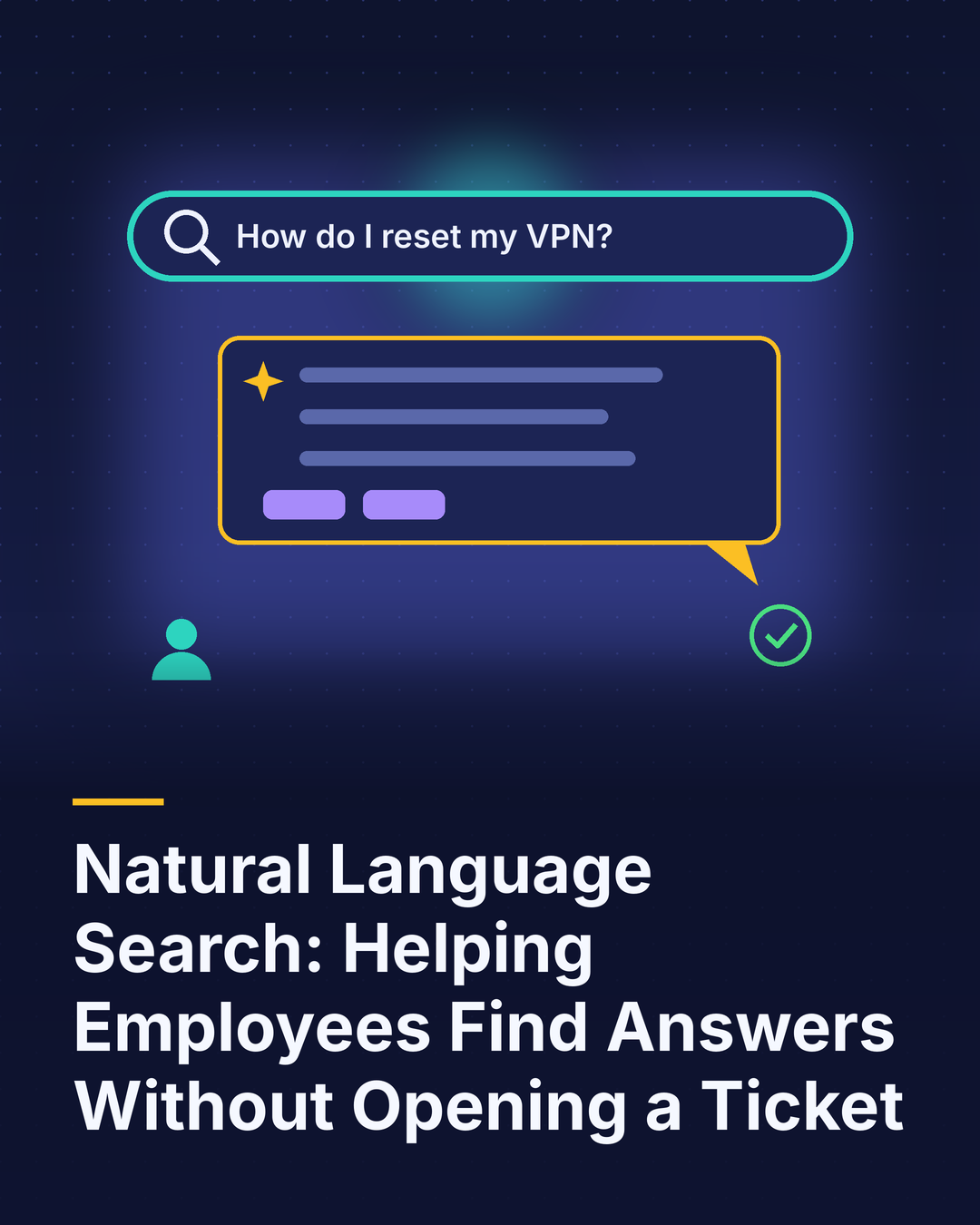
A considerable share of the requests reaching IT, human resources and other internal service teams are not really requests at all. They are questions. How do I connect to the office printer? What is the parental leave policy? Where do I submit an expense report? The answers usually exist somewhere in the organization’s knowledge base or policy documents. Employees simply cannot find them, so they open a ticket or send an email instead.
Natural language search offers a way to close this gap.
Why Traditional Search Falls Short
Conventional enterprise search relies largely on keyword matching. If an employee searches for “working from home allowance” while the relevant policy is titled “Remote Work Equipment Stipend,” the search may return nothing useful. Results are typically presented as a list of documents, leaving the employee to open each one and search for the relevant passage. Many give up after the first attempt.
What Natural Language Search Changes
Modern search, powered by AI language models, interprets the meaning of a question rather than matching its exact words. Several capabilities distinguish it.
- Semantic understanding recognizes that different phrasings describe the same need.
- Direct answers synthesize a concise response from relevant content, with references to the underlying sources.
- Conversational follow-up allows employees to refine or extend their question naturally.
- Personalization considers the employee’s role, location and entitlements, so that a question about holidays returns the policy that applies to that individual.
- Actionable results connect answers to relevant catalog items or workflows, so the employee can complete a request immediately.
Foundations for Success
Natural language search depends on the quality of the content it draws upon. Outdated, contradictory or poorly organized knowledge will produce unreliable answers, however sophisticated the search technology. Organizations should review and consolidate key content, assign ownership for each knowledge area and use search analytics to identify questions that return poor results.
Access controls are equally important. Search must respect existing permissions, ensuring employees see only information they are entitled to access.
Measuring the Effect
Useful measures include the proportion of searches that result in a successful answer, the reduction in tickets for common informational questions and employee satisfaction with search results. Search queries that return no useful answer are particularly valuable, since they reveal precisely where new content is needed.
The Bottom Line
Natural language search helps employees find answers themselves, reducing avoidable tickets and saving time on both sides of the service relationship. Its effectiveness depends on well-maintained content, appropriate access controls and integration with service workflows. Organizations that invest in these foundations will find that many questions are answered in seconds rather than hours, and that their service teams can devote more attention to the issues that genuinely require them.