
Real-Time Analytics at Scale: Turning Streaming Data Into Instant Insight
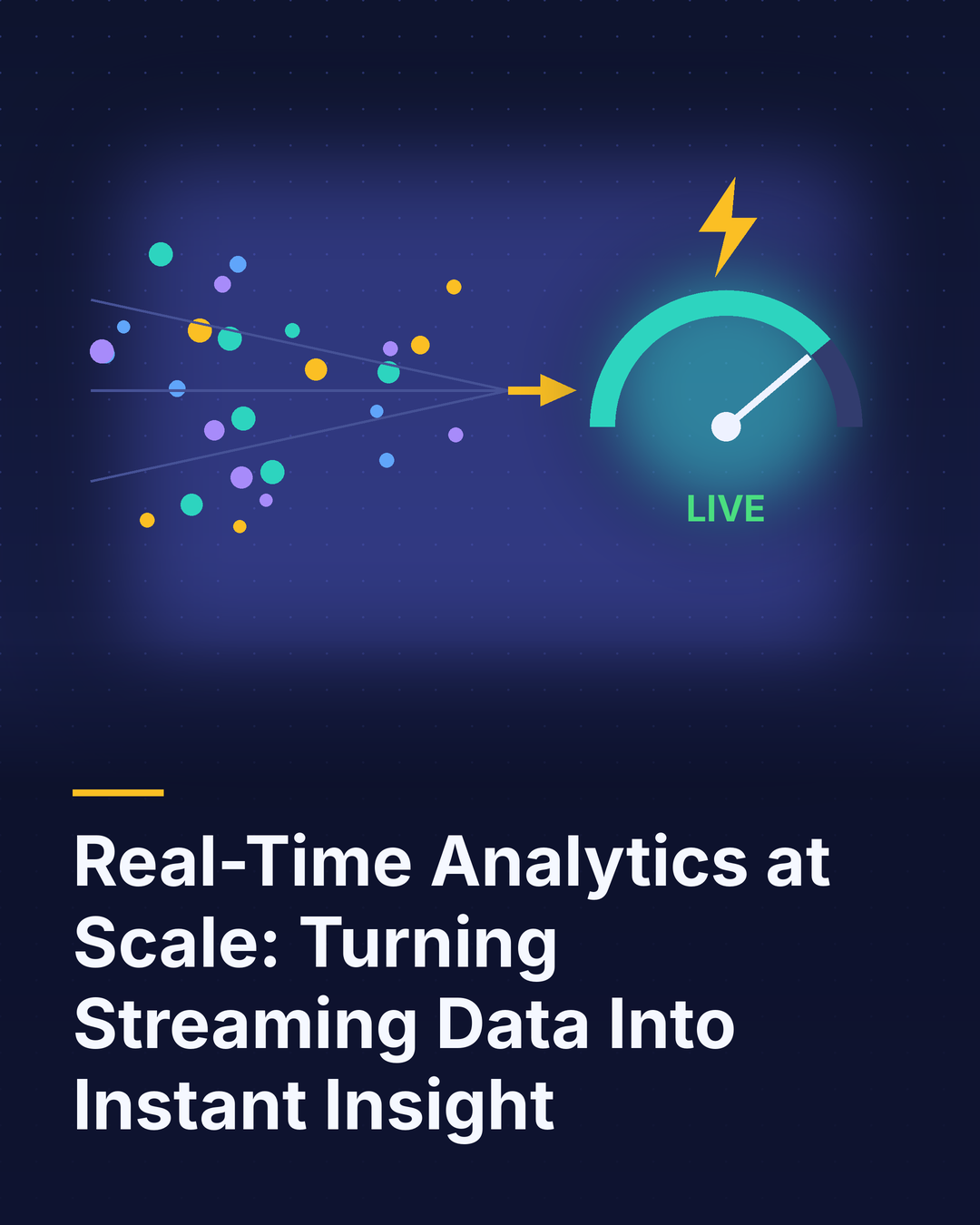
For several decades, the rhythm of enterprise analytics was set by the overnight batch. Data was extracted from operational systems at the end of the business day, transformed, loaded into a warehouse and presented in reports the following morning. For many purposes, this remains perfectly adequate. A monthly financial review does not require data that is seconds old.
There are, however, a growing number of decisions for which yesterday’s data is simply too late. A fraudulent transaction must be identified before it is approved, not after. A failing component on a production line should be detected before it causes an outage. An online retailer’s pricing and recommendations are most effective when they respond to what a customer is doing at that moment.
These situations call for real-time analytics: the continuous processing of data as it is generated.
How streaming architectures work
A real-time analytics system typically comprises three elements. Ingestion captures events as they occur, from applications, devices, sensors, transactions and logs, through a durable messaging service capable of handling very high volumes. Stream processing transforms, enriches, aggregates and evaluates those events continuously, often applying rules or machine learning models. Serving and storage makes the results available to dashboards, applications and alerting systems, while also retaining the data for historical analysis.
In earlier years, building such a pipeline required considerable specialized engineering and dedicated infrastructure. Managed cloud services have changed this significantly. Fully managed messaging, autoscaling stream processing and analytical databases capable of querying streaming and historical data together now allow organizations to build real-time systems without operating complex clusters themselves.
Use cases that justify the investment
Real-time analytics tends to deliver its greatest value in the following areas:
- Fraud and risk detection in payments, insurance claims and account activity
- Operational monitoring of manufacturing equipment, logistics networks and digital services
- Personalization of offers, content and recommendations during a customer session
- Supply chain visibility, tracking inventory and shipments as conditions change
- Security operations, where threats must be identified and contained quickly
Practical considerations
Real-time systems introduce challenges that batch systems do not. Data may arrive late or out of order, and processing logic must account for this. Exactly-once processing, schema changes and backpressure all require careful design. Cost must also be managed, since continuous processing consumes resources around the clock.
Organizations should therefore be selective. Not every metric needs to be real-time, and treating everything as urgent tends to increase cost and complexity without corresponding benefit. The appropriate question is how quickly a decision must be made for its value to be preserved.
The bottom line
Real-time analytics allows organizations to act on events as they happen rather than discovering them after the fact. Managed cloud services have made such systems far more accessible than they once were, provided they are applied to decisions where speed genuinely matters. Combined with AI, streaming data enables systems that not only observe but respond automatically. Organizations that identify their time-sensitive decisions and invest accordingly will find that real-time insight becomes a durable operational advantage.