
Shadow AI: When Employees Paste Company Data into Chatbots
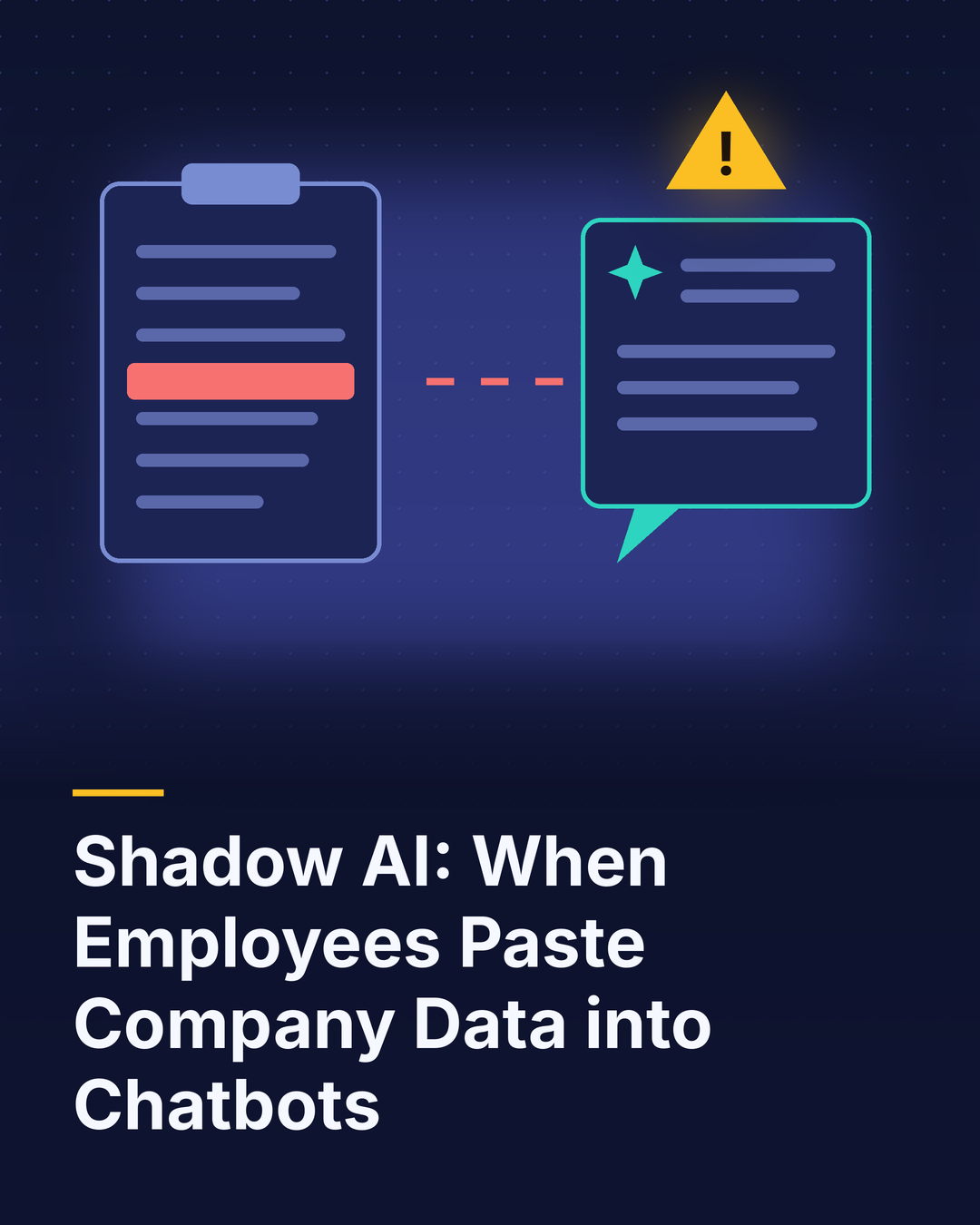
It happens thousands of times a day in most organizations. A sales rep pastes a customer contract into a chatbot to summarize it. An engineer pastes proprietary code to debug an error. A finance analyst uploads a spreadsheet of unreleased results to build a chart. An HR manager asks an AI tool to rewrite a performance review, complete with the employee’s name and medical leave details.
None of these employees intends to leak data. They’re trying to work faster. But each action may send sensitive information to a third-party service the company hasn’t vetted, under terms that may allow the provider to store it, review it or use it to train future models.
Why this risk is different
Traditional data loss usually involved deliberate actions, such as emailing files externally or copying them to a USB drive. Pasting text into a browser-based chatbot is effortless, feels private and often isn’t monitored by existing security tools. The data leaves the organization one paragraph at a time.
The consequences can include:
- Exposure of confidential information, including trade secrets, source code, product plans and M&A details
- Privacy and regulatory violations when personal data about customers, patients or employees is shared without a lawful basis
- Breach of contractual obligations to customers and partners whose data you’ve agreed to protect
- Loss of intellectual property protection if proprietary information is disclosed outside the organization
Why banning AI doesn’t work
Some organizations responded by blocking public AI tools entirely. In most cases, that simply pushed usage to personal phones and home computers, where security teams have even less visibility. Employees use these tools because they’re genuinely useful. The more effective strategy is to provide a safe alternative and guide behavior.
A practical defense strategy
1. Provide approved enterprise AI tools. Enterprise versions of major AI platforms typically offer contractual commitments not to train on your data, administrative controls, single sign-on, audit logs and data retention settings. When employees have a capable approved option, most will use it.
2. Classify what can and can’t be shared. Create a simple, clear policy. For example: public information can go into any approved tool; internal information only into enterprise-approved tools; restricted data such as customer personal data, credentials, source code and financial results requires specific approval or is prohibited.
3. Deploy AI-aware data loss prevention. Modern DLP and browser security tools can detect sensitive data being pasted or uploaded into AI services and block, warn or redact it in real time. Warning prompts that explain why an action is risky also educate employees in the moment.
4. Train with real examples. Generic awareness training doesn’t stick. Show employees realistic scenarios relevant to their roles and explain the safe alternative for each.
5. Monitor and adjust. Track which AI services employees use and what kinds of data are involved. Use that insight to expand approved tools where demand is high and tighten controls where risk is concentrated.
Make the secure path the easy path
The goal isn’t to stop employees from using AI. It’s to make sure the easiest way to use AI is also the secure way. When approved tools are capable, accessible and clearly explained, risky behavior drops naturally.
The bottom line
Every paste into an unapproved chatbot is a potential data leak. Organizations that combine approved enterprise tools, clear data rules, AI-aware DLP and practical training can let employees capture AI’s productivity benefits without giving away the information that makes the business valuable.