
The Next Era of Enterprise Cloud: 7 Trends Shaping the Next Five Years
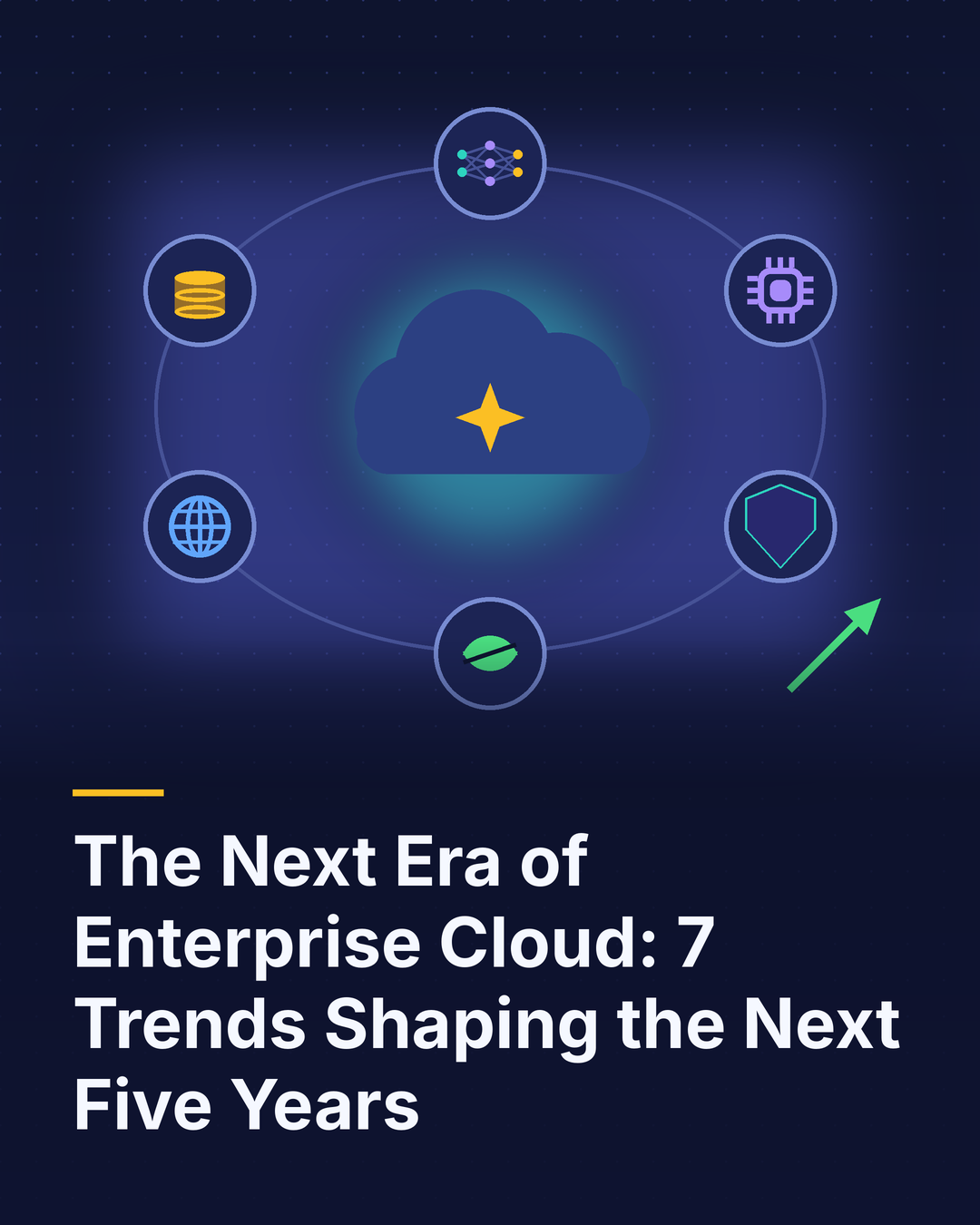
When I reflect on the evolution of enterprise computing over the past three decades, from mainframes to client-server, from the internet to virtualization and then to the cloud, one observation stands out. Each transition was initially framed as a change in infrastructure, and each ultimately proved to be a change in how organizations operate.
The cloud is now entering a new phase of that kind. Its first era was largely about migration and cost. Its second was about modernization and speed. The next will be shaped principally by artificial intelligence, and by the demands AI places on data, infrastructure, security and governance. I would highlight seven trends.
1. The cloud becomes the AI platform
Enterprises will increasingly evaluate cloud providers not only on infrastructure, but on the breadth and quality of their AI capabilities: access to a range of models, tools for building and governing AI applications, and the specialized infrastructure required to run them efficiently. Cloud and AI strategy will effectively become a single strategy.
2. Agents move into core business processes
AI systems that plan and act, rather than merely answer, will progressively take on defined portions of business processes in finance, customer service, IT operations and software development. The organizations that benefit most will be those that engineer these agents with rigorous controls and clear accountability.
3. Data platforms become AI platforms
The separation between analytics and AI will continue to dissolve. Unified data platforms that store all data types, enforce consistent governance and run AI directly where data resides will become the foundation of enterprise intelligence.
4. Specialized infrastructure proliferates
General-purpose computing will be complemented by a growing variety of accelerators and purpose-built hardware, optimized for training, inference and specific workloads. Choosing the right infrastructure for each task will become an important source of cost and performance advantage.
5. Sovereignty and regulation shape architecture
Data residency requirements, AI regulation and digital sovereignty concerns will increasingly influence where and how workloads run. Cloud providers will continue expanding regional, partner-operated and controlled environments to meet these obligations.
6. Security becomes AI-driven, and AI must be secured
Security operations will rely more heavily on AI to detect and respond to threats at scale. At the same time, AI systems themselves will introduce new attack surfaces that require dedicated controls. These two developments will proceed together.
7. Efficiency becomes a strategic priority
As AI workloads grow, both cost and energy consumption will receive closer scrutiny from boards and regulators. FinOps discipline, efficient model selection and attention to carbon-free energy will move from operational concerns to strategic ones.
What this means for leaders
These trends suggest several priorities: invest in a governed, unified data foundation; develop AI engineering and governance capabilities; build security for AI into existing programs; and preserve architectural flexibility through open standards, since the landscape will continue to change rapidly.
The bottom line
The next era of enterprise cloud will be defined less by where computing happens and more by what organizations accomplish with data and AI. Those that prepare their data, governance and security foundations now will be well placed to capture that value. In my experience, transitions of this magnitude reward organizations that combine ambition with discipline, and I see no reason this one will be different. The leaders of the next five years are, in most cases, laying their foundations today.