
Why Your Configuration Management Database Is the Foundation of Reliable IT
Few elements of IT service management attract as much skepticism as the configuration management database, commonly known as the CMDB. Many organizations have attempted to build one, invested considerable effort and ended with a repository that is incomplete, outdated and largely ignored. The disappointment is understandable. Yet the underlying need has never been greater. In complex, hybrid environments, an accurate understanding of what the organization operates and how those components relate to one another is essential for reliable service.
What a CMDB Actually Provides
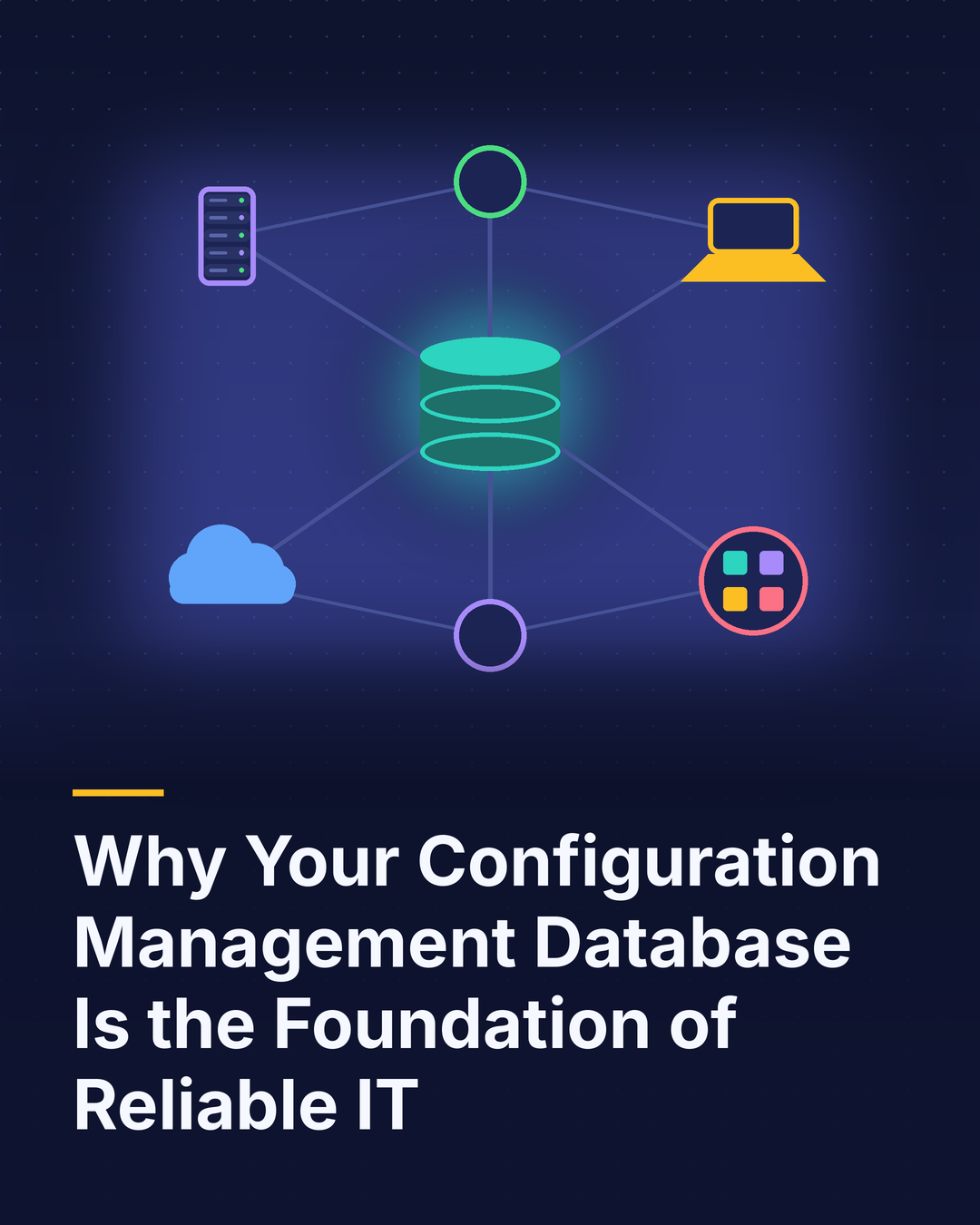
A CMDB records configuration items, such as servers, applications, databases, network devices and cloud resources, together with the relationships between them. Its value lies less in the inventory itself than in those relationships. Knowing that a particular database supports an application, which in turn underpins a customer-facing business service, allows IT teams to answer critical questions quickly.
- During an incident: Which business services are affected, and who should be notified?
- Before a change: What else depends on the component being modified, and what is the risk?
- For security: Which systems are exposed to a newly disclosed vulnerability, and how critical are they?
- For planning: Which assets are approaching end of support, and what would retiring them affect?
Without this information, each of these questions requires manual investigation, often under considerable time pressure.
Why CMDB Initiatives Fail
CMDB projects typically falter for a handful of familiar reasons. They attempt to record everything at once rather than focusing on what matters most. They rely on manual data entry, which cannot keep pace with dynamic cloud environments. They lack clear ownership, so data quality deteriorates once the initial project ends. And they are disconnected from daily processes, so no one has a reason to use or maintain the information.
Building a CMDB That Stays Accurate
A more successful approach rests on several principles.
- Begin with business services. Identify the services most critical to the business and map the components that support them, rather than attempting a complete inventory at the outset.
- Automate discovery. Use automated discovery and integration with cloud providers and existing tools to populate and refresh configuration data continuously. Manual maintenance does not scale.
- Assign data ownership. Each class of configuration item should have an accountable owner responsible for its accuracy.
- Embed the CMDB in daily work. When incident, change, problem and security processes rely on CMDB data, inaccuracies are noticed and corrected quickly. Use is the best guarantee of quality.
- Measure health. Track completeness, correctness and compliance with data standards, and address gaps systematically.
The CMDB and AI
The rise of AI in IT operations has made accurate configuration data more important still. AIOps correlation, automated change risk assessment and AI agents that diagnose or remediate issues all depend on understanding how components relate to one another. An AI system working from an inaccurate map will draw inaccurate conclusions.
The Bottom Line
A configuration management database is the map that allows IT teams to understand, protect and change their environment with confidence. Its past reputation reflects poor implementation rather than limited value. By focusing on critical business services, automating discovery, assigning ownership and embedding configuration data in everyday processes, organizations can build a CMDB that remains accurate and genuinely useful. As AI takes on a larger role in IT operations, that accuracy will move from desirable to indispensable.