
Connecting Schedule, Cost and Model Data for Better Project Decisions
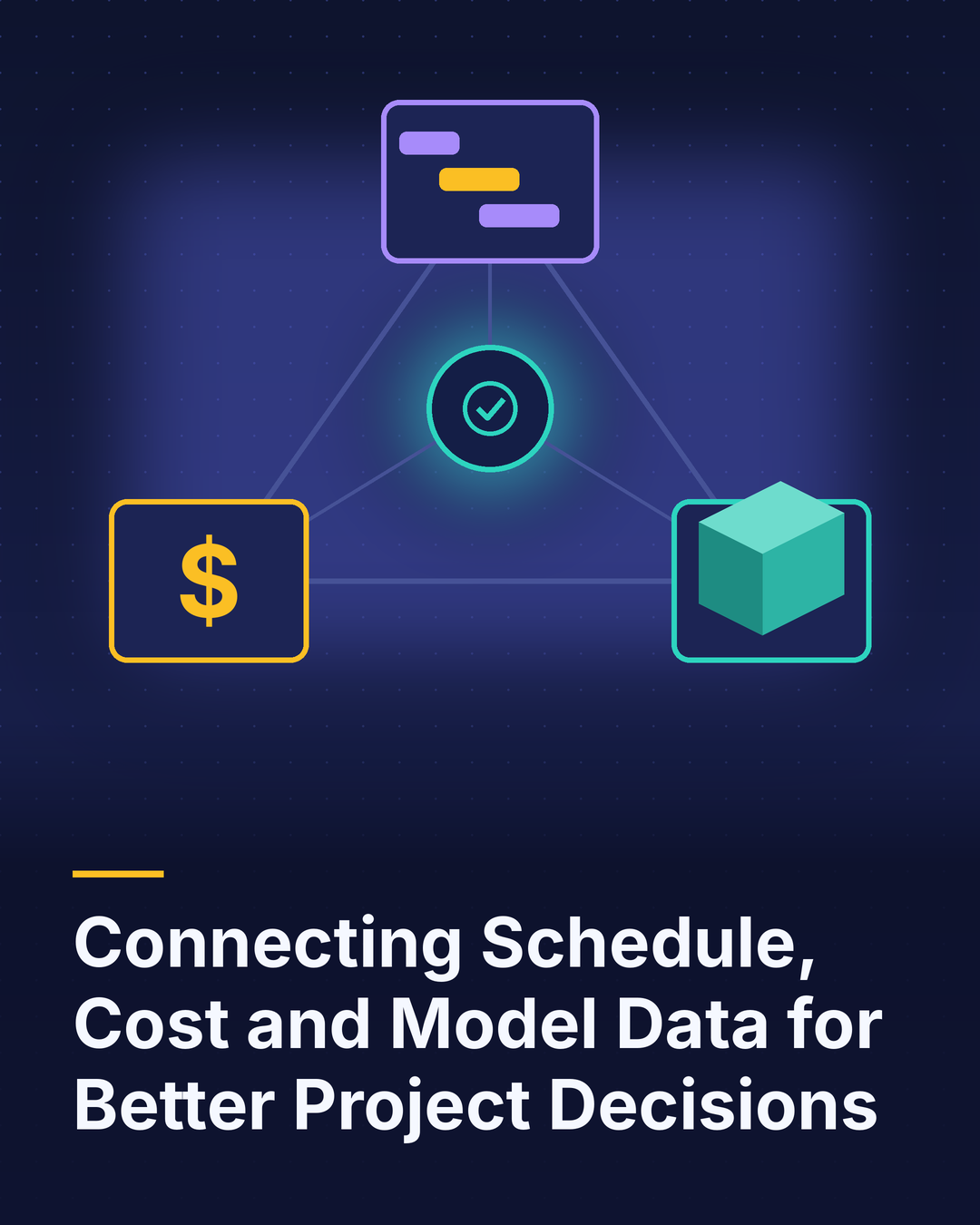
Picture a common situation. The owner asks whether moving the curtain wall installation up two weeks is possible. The scheduler checks the critical path. The project manager checks the budget and procurement status. The BIM coordinator checks whether the relevant areas are fully coordinated. Each person gives a partial answer from a separate system, and it takes several days and a meeting to piece them together.
Now imagine answering that question in an afternoon, because schedule activities, cost codes and model elements are already linked. That’s the promise of connected project data.
Three views of the same project
The schedule tells you when work happens. The budget tells you what it costs. The model tells you what’s being built and where. Each is valuable on its own, but most important project decisions involve all three at once: resequencing work, evaluating a design change, recovering a delay or deciding where to add crews.
When they live in separate tools maintained by different people, teams make decisions with incomplete information, or spend significant time reconciling data before they can decide anything.
What linking them makes possible
When model elements are tied to schedule activities and cost codes, teams can visualize the construction sequence over time and spot logistics or sequencing problems before they happen. A design change can be evaluated for quantity, cost and schedule impact together. Progress can be tracked by area, showing not just what’s behind schedule but what that delay means for cost. Owners and executives can see clear, visual progress updates instead of dense reports.
Getting started without boiling the ocean
Full integration across every element and activity is a big lift. Most teams start smaller. Align schedule activity breakdowns with model zones and levels. Use consistent location and cost code structures across systems. Link the highest-risk or highest-value scopes first, like structure, facade or major MEP systems, and expand once the process proves its value.
Consistent data structure matters more than any specific technology. If the schedule calls it “Level 3 East” and the model calls it “L03-Zone B,” nothing will connect cleanly.
The bottom line
Better decisions come from seeing the whole picture. Connecting schedule, cost and model data gives project managers a single view of time, money and scope, turning days of reconciliation into hours of analysis. Firms that build this capability gradually, starting with their highest-risk scopes, see quick wins that justify going further. Over time, it changes how the whole team plans, communicates and responds when things don’t go as expected.