
eSIM for the Enterprise: Simplifying Deployment, Travel and Carrier Management
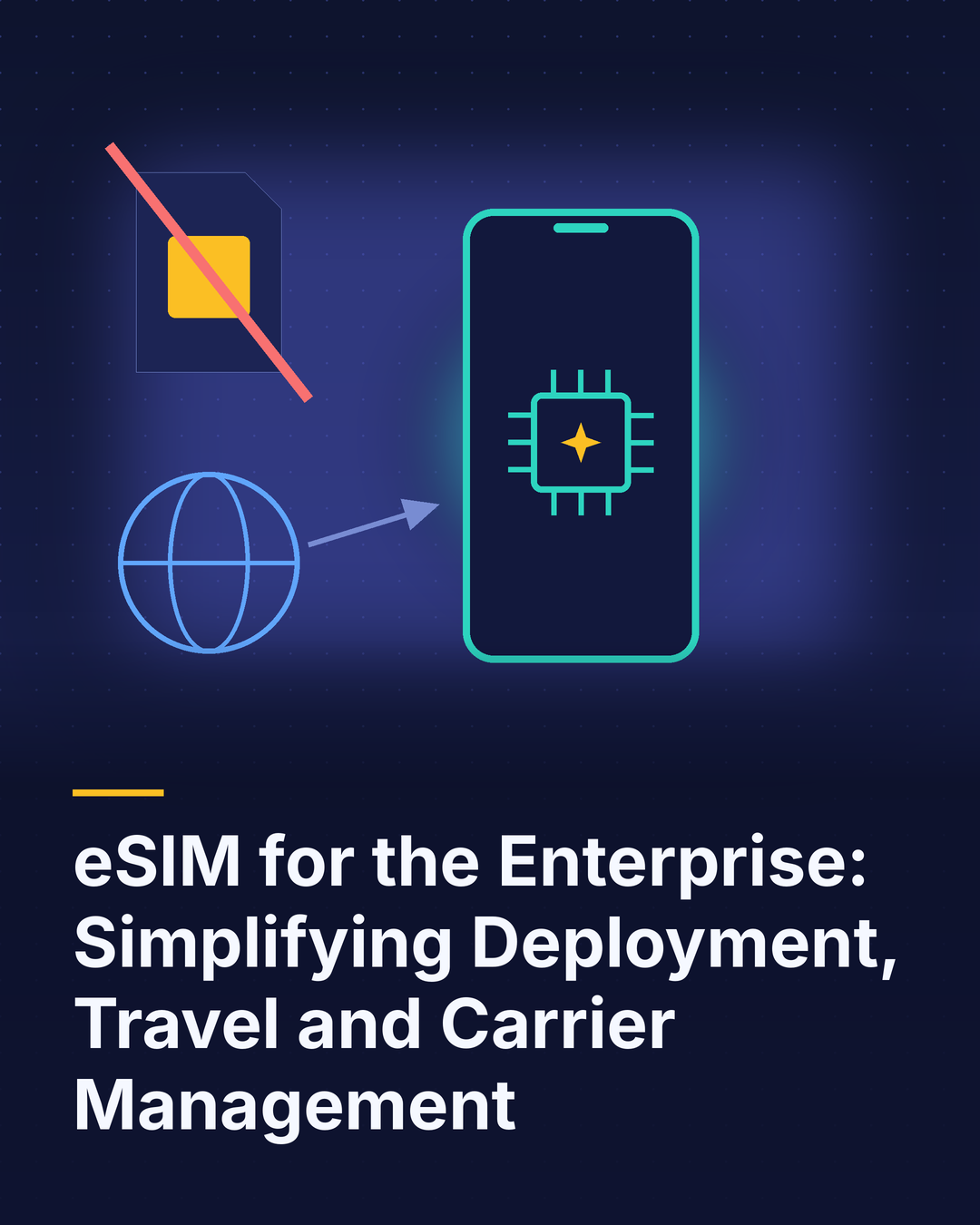
The physical SIM card has been part of mobile phones for decades. It’s also been a quiet source of hassle for IT teams: cards that need to be ordered, shipped, inserted, swapped, tracked and occasionally lost. Multiply that across hundreds or thousands of devices and the friction adds up.
The eSIM, an embedded SIM built directly into the device, removes the plastic card entirely. Carrier profiles are downloaded digitally, and most modern smartphones, many tablets and a growing number of laptops now support it. Some newer phones support eSIM only. For businesses, the shift is less about the chip itself and more about what digital provisioning makes possible.
Three common scenarios show the difference.
Scenario one: onboarding a new hire
With physical SIMs: IT orders a SIM, waits for delivery, inserts it into the phone, activates the line and ships the device. If the SIM is wrong or damaged, the process starts over.
With eSIM: The device ships directly to the employee. When it’s powered on and enrolled in device management, the carrier profile can be delivered over the air. Combined with zero-touch enrollment, a new hire can be fully set up within minutes of opening the box.
Scenario two: international travel
With physical SIMs: Employees face expensive roaming charges or hunt for local SIM cards on arrival, swapping tiny cards in airport terminals and losing their regular number in the process.
With eSIM: Travelers can add a local or regional data plan digitally, often before leaving, while keeping their business line active for calls and texts. Costs drop and the employee stays connected from the moment they land.
Scenario three: changing carriers
With physical SIMs: Switching carriers for better coverage or pricing means a massive logistics project to collect and replace cards across the fleet.
With eSIM: New carrier profiles can be provisioned remotely, making migrations faster and giving businesses more flexibility to negotiate.
Security benefits
Because there’s no removable card, a thief can’t simply pop the SIM out and use it in another device, and SIM-based fraud becomes harder to execute. Lines can also be suspended or changed remotely when a device is lost.
Before you switch
Confirm that your devices, carriers and management platform support enterprise eSIM workflows, including bulk activation. Plan for devices that still require physical SIMs, and update support procedures for help desk teams.
The bottom line
eSIM turns mobile connectivity from a physical logistics task into a digital one. For businesses managing large device fleets, frequent travelers or multi-carrier strategies, it saves time, money and frustration. Most organizations can start by using eSIM for new device rollouts and expand from there. Over time, the plastic SIM card is likely to become an exception rather than the rule.