
From Construction to Digital Twin: Delivering Data Owners Actually Use
At the end of most construction projects, the owner receives a mountain of information. Boxes or drives full of O&M manuals, warranties, as-built drawings, equipment data sheets, test reports and attic stock lists. Increasingly, they also receive a model.
And then, all too often, very little of it gets used.
Facility teams struggle to find what they need. The model reflects the design, not what was actually installed. Equipment information is buried in PDFs instead of loaded into the maintenance system. Within a few years, the handover package is outdated or forgotten, and the operations team is back to walking the building with a flashlight to figure out where a valve is.
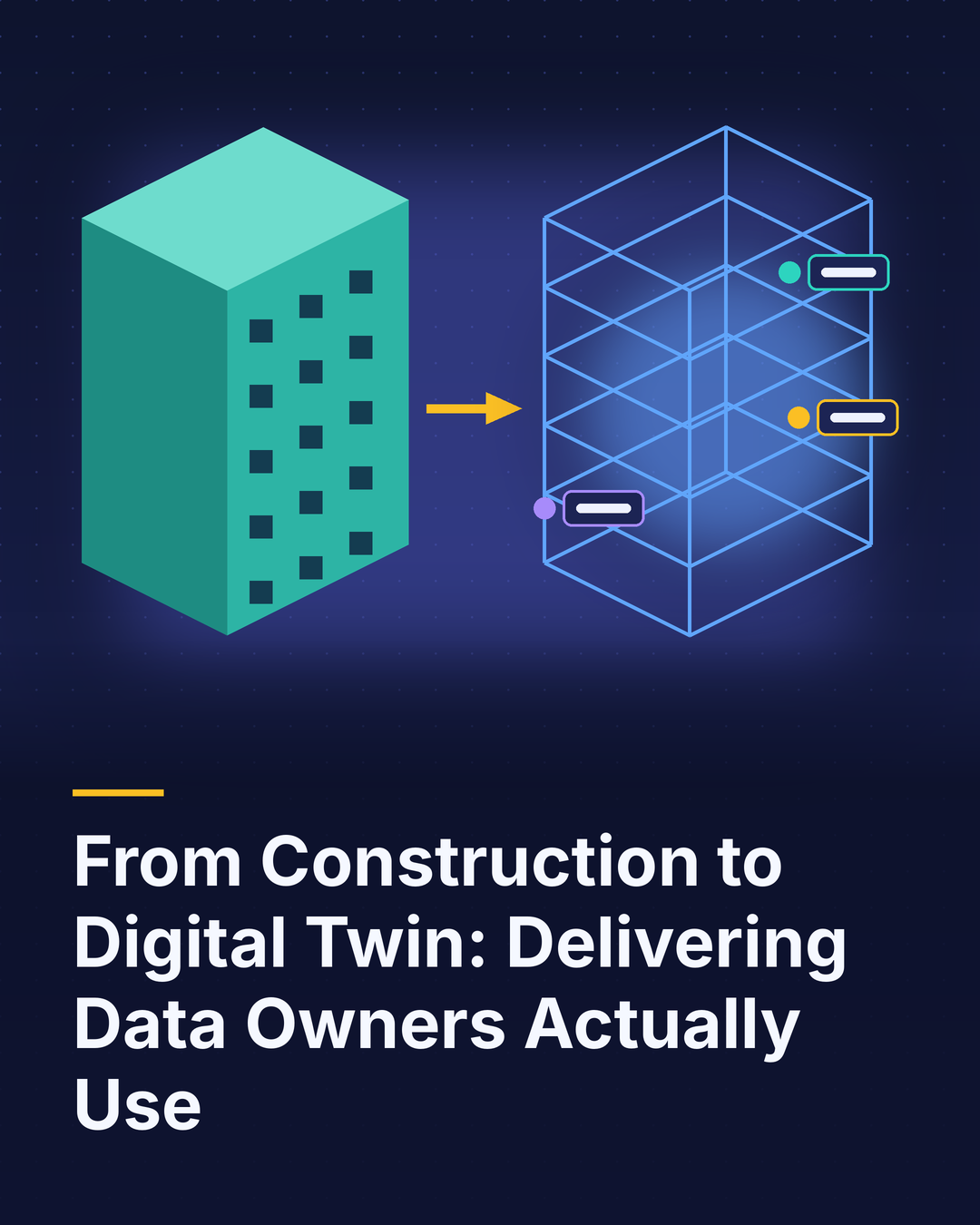
The idea of a digital twin, a living digital representation of a building connected to how it’s actually operated, has gained real momentum. But a digital twin is only as good as the data contractors deliver to create it.
Start with the owner’s end use
The biggest mistake is treating handover as a document dump at the end of the project. The best outcomes start at the beginning, with a clear understanding of what the owner’s operations team actually needs.
That means asking practical questions early. Which assets will be maintained in the owner’s maintenance management system? What attributes do they need for each one: manufacturer, model, serial number, install date, warranty terms, maintenance intervals? How should assets be named and located? What file formats and systems will they use?
When those requirements are defined up front and written into contracts, contractors can capture the information as work progresses rather than scrambling to reconstruct it at closeout.
Capture data as the building goes up
Much of the data owners need is created during construction. Submittals contain product data. Installation records show what went where. Inspections and commissioning confirm performance. Field teams can attach serial numbers, photos and test results to model elements or asset records at the time of installation, when the information is right in front of them.
This approach is far more accurate, and far less painful, than trying to track down serial numbers on hundreds of units a week before turnover.
Make the model match reality
A design model doesn’t automatically become a reliable as-built. Field changes, RFI responses and substitutions need to be reflected along the way. Reality capture, such as laser scanning or site photography, helps verify that critical systems are where the model says they are, especially for concealed MEP work.
Deliver in a usable format
Finally, deliver data in a structure the owner can load directly into their systems, rather than a folder of PDFs. Standardized formats and agreed naming conventions make the difference between data that’s used and data that’s archived.
The bottom line
Owners invest heavily in their buildings, and they increasingly expect the information to match. Contractors who plan for handover from day one, capture asset data during construction and keep the model aligned with reality can deliver a real foundation for a digital twin. That capability is becoming a meaningful differentiator in competitive pursuits. It also tends to make closeout faster and cleaner, which is something every project team appreciates.