
IoT and Connected Fleets: How Mobility Is Reshaping Logistics and Field Service
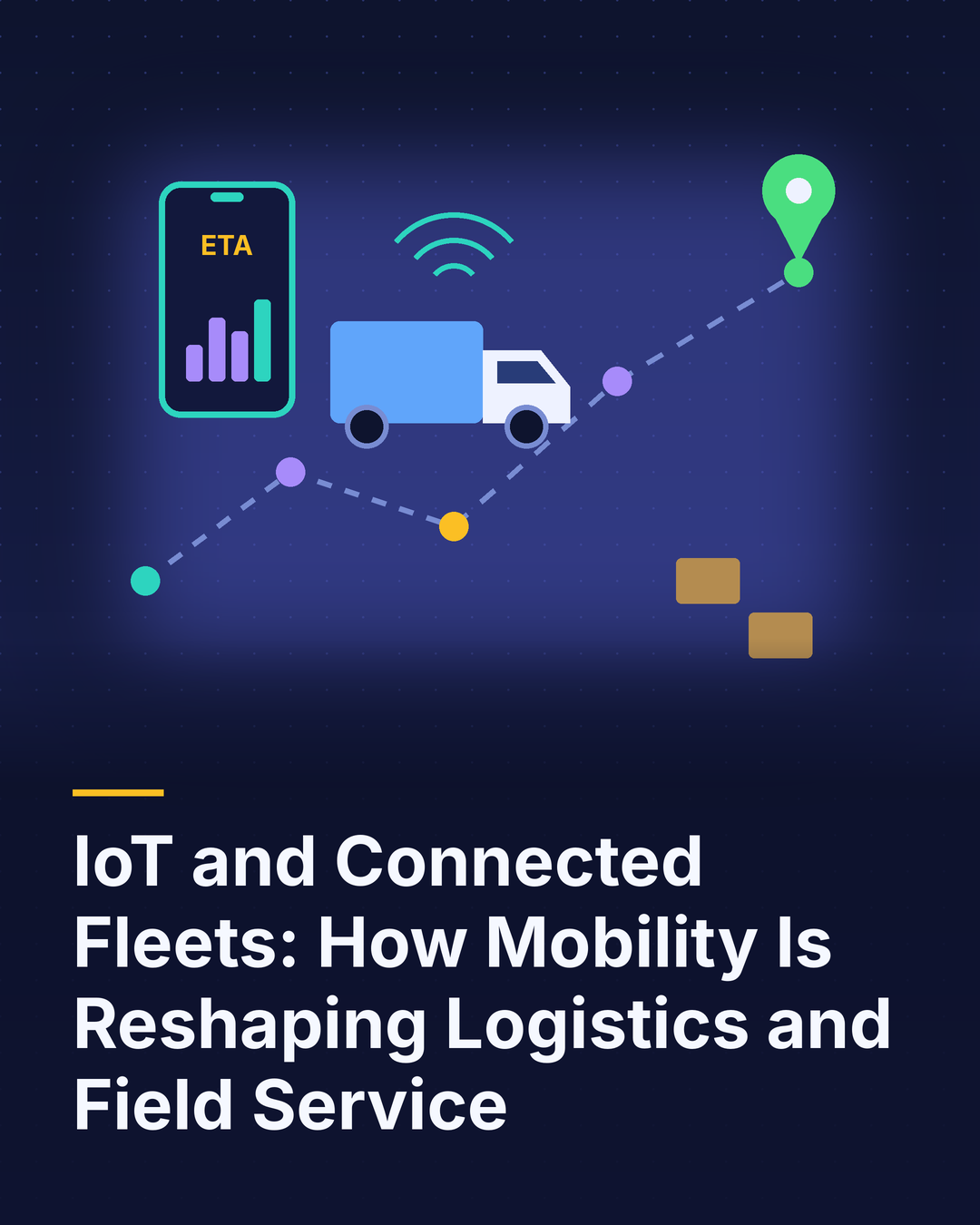
Ten years ago, a fleet manager’s view of the operation came mostly from phone calls. Where’s the truck? When will the delivery arrive? Did the technician finish the job? Today, many fleet managers watch the answers on a screen in real time. Vehicles, trailers, equipment and even individual packages report their location and condition continuously over cellular networks.
That’s the connected fleet, and it’s reshaping how logistics and field service companies operate.
What’s being connected
The Internet of Things in fleet operations covers far more than GPS dots on a map. Telematics devices report location, speed, idling, fuel use and engine diagnostics. Dash cameras record road events and can alert managers to risky driving. Sensors monitor temperature and humidity in refrigerated cargo, tire pressure, door openings and equipment usage. Asset trackers follow trailers, containers and high-value tools that are easy to lose.
Meanwhile, drivers and technicians carry smartphones or rugged tablets running dispatch, navigation, electronic logging, proof-of-delivery and work order apps. Together, the devices and the people form one connected operation.
The business impact
Routing gets smarter as real-time traffic and job data allow dispatchers to adjust schedules on the fly. Fuel costs drop with less idling and fewer wasted miles. Maintenance becomes predictive, catching engine problems before a breakdown strands a driver. Safety improves through coaching based on actual driving behavior. Customers get accurate arrival windows and live tracking, which reduces calls asking “where’s my order?” And temperature-sensitive goods like food and pharmaceuticals carry a documented record of proper handling.
Connectivity is the foundation
All of this depends on reliable cellular coverage across wide and often rural service areas. IoT devices typically need modest bandwidth but broad, consistent coverage and long battery life. Low-power IoT network technologies are designed for exactly this, while 5G supports higher-bandwidth uses like video. Businesses should evaluate coverage along actual routes, IoT-specific data plans, and how devices will be activated and managed at scale.
Security matters too. Every connected sensor and vehicle is a potential entry point, so devices need secure configurations, regular updates and network-level protections.
The bottom line
Connected fleets turn vehicles, cargo and crews into a source of continuous operational data. Businesses that combine IoT sensors, mobile devices and reliable connectivity gain better visibility, lower costs and happier customers. The key is starting with clear business goals rather than collecting data for its own sake. Fleet operators that build on that foundation are well positioned for what comes next, including more automation and AI-driven planning.