
Live Translation and Transcription: How Mobile AI Is Breaking Down Language Barriers at Work
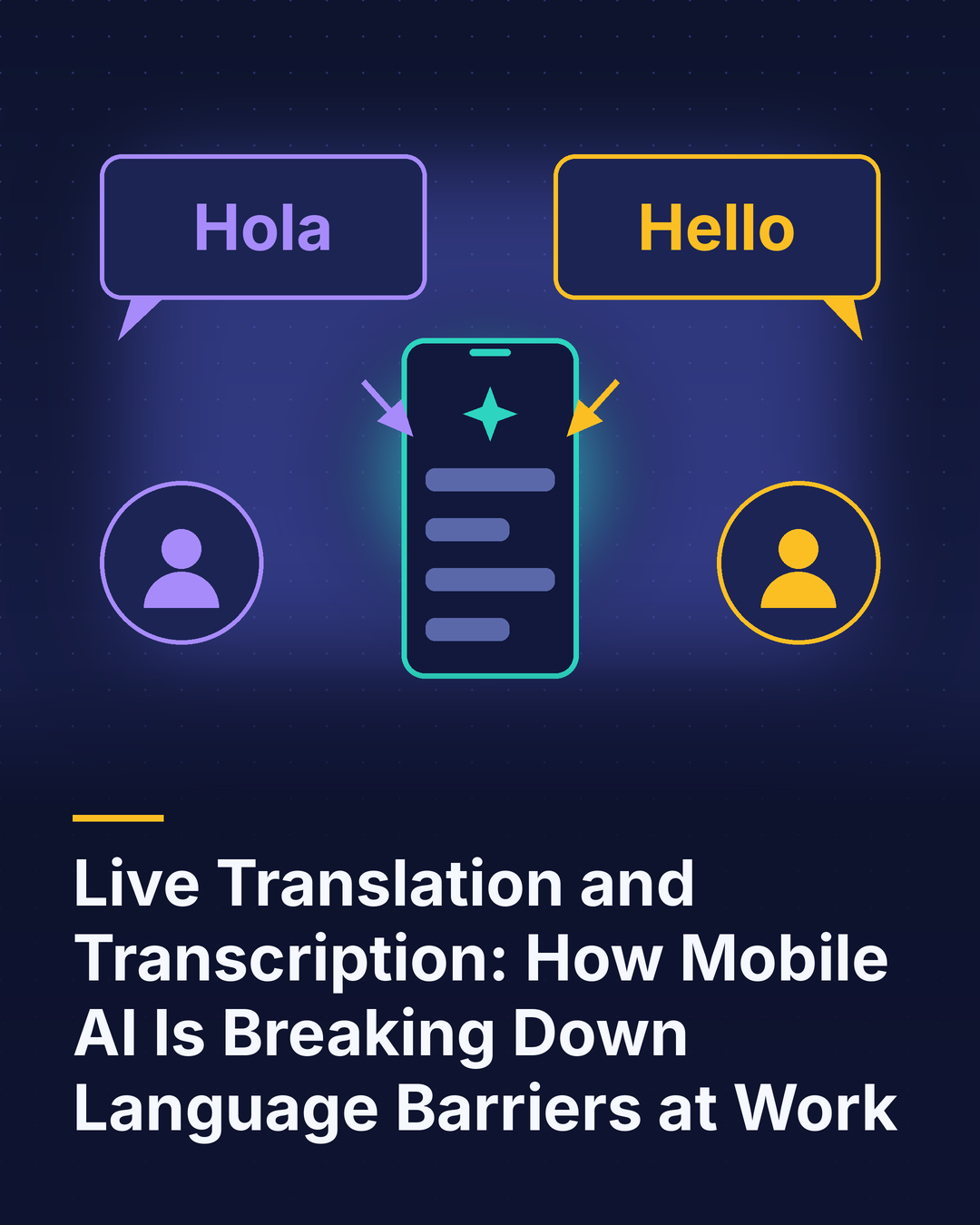
A warehouse supervisor walks the floor with a new hire who speaks Spanish. A hotel front desk agent checks in a family from Japan. A home health nurse visits a patient whose first language is Vietnamese. In each case, the conversation that matters most could easily get lost in translation.
Until recently, the options were limited: find a bilingual colleague, call an interpreter line or rely on gestures and guesswork. Now, a smartphone can do much of that work in real time.
What mobile AI can do today
Modern phones increasingly support live translation of face-to-face conversations, phone calls and text messages, often across dozens of languages. Some can translate signs, menus and documents through the camera. Live transcription turns spoken words into text on the screen as people talk, which helps in noisy environments, supports colleagues and customers who are deaf or hard of hearing, and creates a record of what was said.
Many of these features now run directly on the device rather than in the cloud. That means faster responses, the ability to work without a strong connection, and fewer privacy concerns because conversations don’t have to leave the phone.
Where businesses are using it
Frontline teams in retail, hospitality and transportation use translation to serve customers who speak different languages. Manufacturers and logistics companies use it to train and communicate with multilingual crews. Field service teams use camera translation to read equipment labels and manuals written in other languages. Sales and account teams rely on transcription to capture meetings accurately and focus on the conversation instead of note-taking.
The benefit isn’t only efficiency. When employees can communicate clearly, safety instructions are understood, customers feel respected and new hires get up to speed faster.
Know the limits
AI translation is impressive but not perfect. Idioms, technical jargon and heavy accents can still trip it up. For high-stakes situations, such as medical consent, legal matters or critical safety instructions, professional interpreters remain the right choice. Companies should set clear guidance on when AI translation is appropriate and when it isn’t.
The bottom line
Language barriers have always cost businesses time, customers and sometimes safety. Mobile AI puts capable translation and transcription in every employee’s pocket, making everyday conversations easier across a diverse workforce and customer base. Choosing devices with strong on-device language features is a simple way to extend that capability. Used thoughtfully, alongside professional interpreters where it matters, it helps teams communicate with more confidence and fewer misunderstandings.