
Network Slicing Explained: Guaranteed Performance for Critical Business Applications
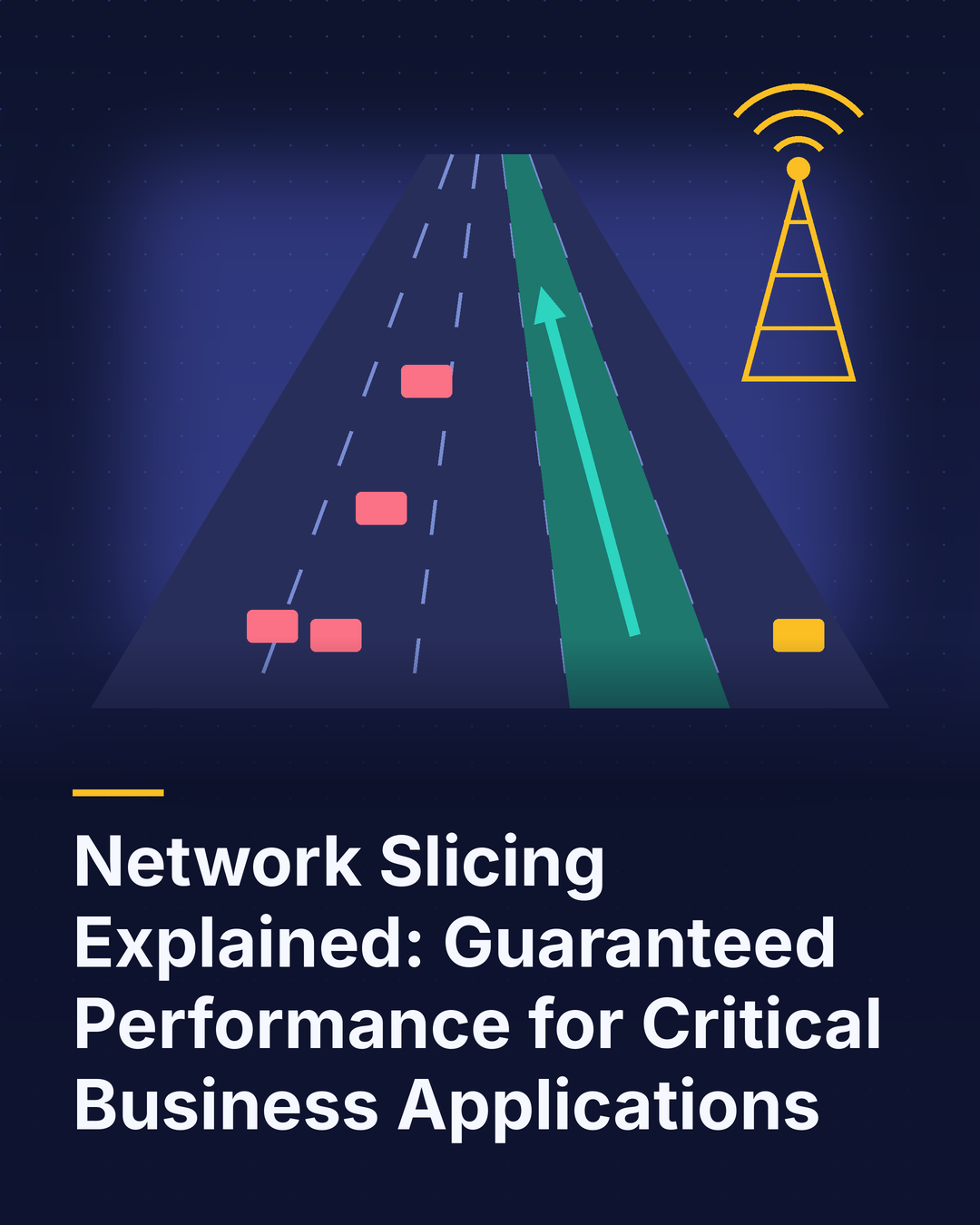
Think of a cellular network as a busy highway. Everyone shares the same lanes: people streaming video, scrolling social media, making calls, and businesses running payment terminals, video inspections and fleet tracking. Most of the time, traffic flows fine. But at a stadium, a concert, a crowded downtown at rush hour or the scene of an emergency, everyone slows down together.
Network slicing changes that model. It lets a carrier carve dedicated virtual lanes out of the same physical network, each with its own performance characteristics. A business application can get a lane that stays fast and reliable even when the rest of the highway is jammed.
How it works
Network slicing is made possible by 5G standalone networks, which use a fully 5G core rather than relying on older 4G infrastructure. That modern, software-defined core allows a carrier to create multiple logical networks, or slices, on top of shared physical infrastructure.
Each slice can be tuned for specific needs:
- Guaranteed bandwidth for applications like live video streaming or large uploads
- Low latency for real-time applications such as remote control or augmented reality
- High reliability and priority for mission-critical communications
- Massive device capacity for large numbers of sensors and connected devices
Traffic in one slice is logically separated from traffic in others, which also helps with security and predictability.
Real business use cases
Payments and point of sale. Pop-up retail, food trucks and event vendors need card transactions to go through even when thousands of people are on the same network. A dedicated slice keeps payment processing fast during peak crowds.
Live broadcasting and media. News crews and event producers can stream high-quality video from crowded venues without relying on unpredictable shared capacity.
Public safety and first responders. Priority slices give emergency teams reliable connectivity when networks are overwhelmed during disasters or major incidents.
Field operations. Utilities, construction and inspection teams can run video-based remote assistance, drones and real-time data uploads with consistent performance.
Healthcare. Mobile clinics and ambulances can maintain reliable connections for telehealth and patient data.
What businesses should consider
Network slicing is still maturing. Availability depends on carrier deployment of 5G standalone networks, coverage in your locations and device support. Business offerings are expanding, but organizations should ask carriers specific questions about where slicing is available, which devices are compatible, what performance is guaranteed and how it’s measured, and what it costs compared with standard plans.
It also makes sense to start with a clear use case where unreliable connectivity is costing money or creating risk, rather than adopting slicing for its own sake.
The bottom line
Network slicing brings something businesses have long wanted from cellular networks: predictable performance for the applications that matter most. As 5G standalone networks expand and devices add support, it’s becoming a practical option for payments, video, field operations and critical communications. Companies that identify their most connectivity-sensitive workflows now will be ready to take advantage as offerings grow. For many, it could replace expensive dedicated connections with a more flexible, mobile alternative.