
Real-Time Cost Forecasting: Spotting Budget Overruns Before They Happen
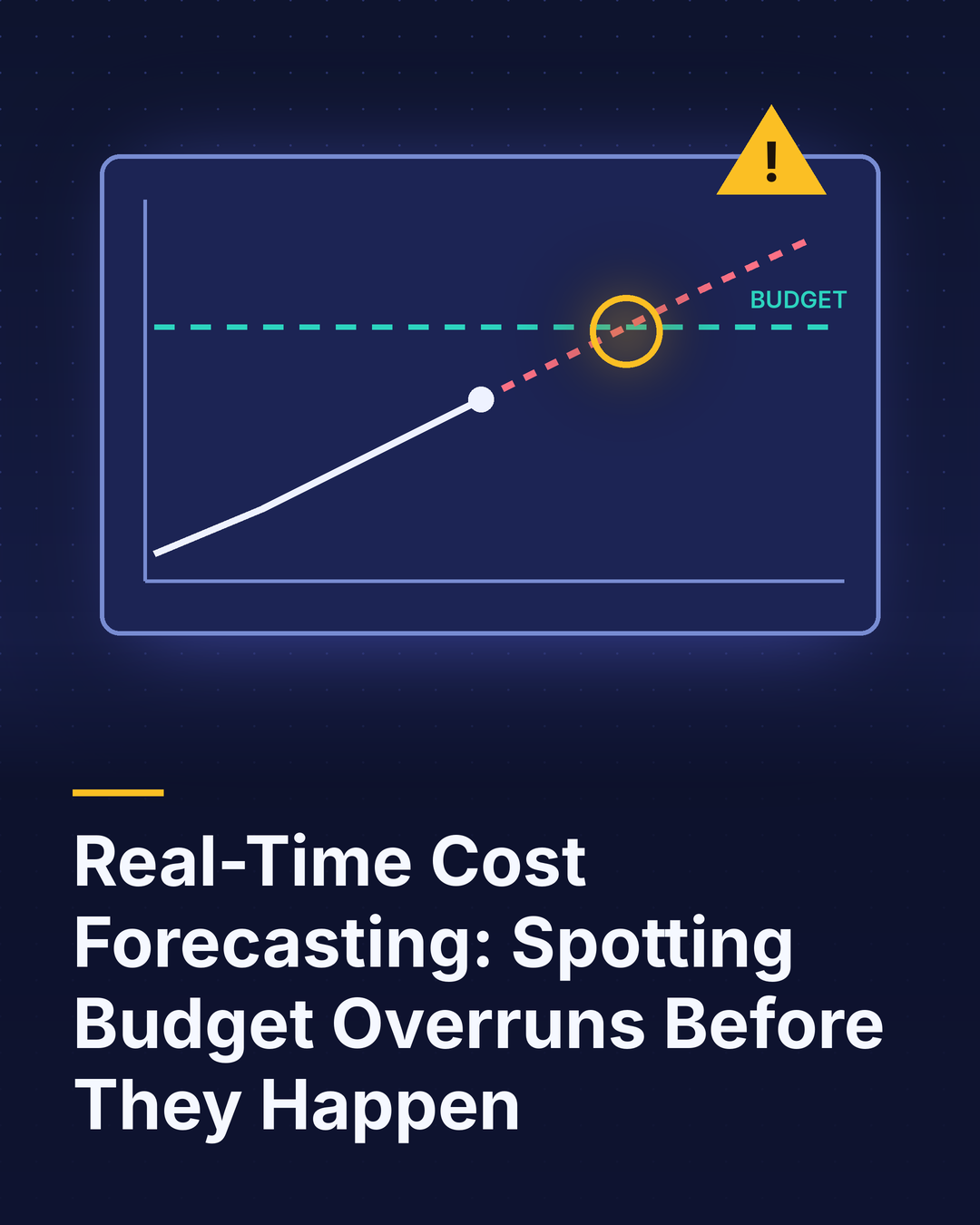
Most construction cost reports answer the wrong question. They tell you what has already been spent. By the time an overrun shows up in actual costs, the money is gone, and the options for recovering it are limited.
Forecasting asks a more useful question: based on what we know today, where will this project finish? Answering it well, and frequently, gives project managers time to act.
Why traditional forecasts fall behind
On many projects, the forecast is updated once a month, often in a spreadsheet assembled from several sources. Committed costs come from purchasing, actuals from accounting, pending changes from a separate log and productivity assumptions from the project manager’s experience. By the time everything is pulled together, the information is weeks old.
That lag hides problems. A labor productivity issue that started in week two might not appear in the forecast until week eight.
What a real-time forecast includes
A strong forecast combines several pieces of information, updated continuously rather than monthly:
- Original budget and approved changes
- Committed costs from subcontracts and purchase orders
- Actual costs to date
- Pending and potential change orders, with realistic probabilities
- Estimated cost to complete, based on current productivity rather than the original plan
- Remaining contingency and how fast it’s being consumed
When these sources live in one connected system, the estimate at completion updates as the project moves, instead of waiting for someone to rebuild the spreadsheet.
Watch the leading indicators
The earliest signs of trouble usually show up outside the cost report. Installed quantities falling behind labor hours, an unusual rise in RFIs or rework, a growing backlog of unpriced changes or a subcontractor requesting more manpower than planned all deserve attention. Tying field data like daily logs and quantities installed to cost codes makes these signals visible much sooner.
Make forecasting a habit
Review the forecast with the whole project team regularly, not just at month-end. Ask what changed, why, and what the plan is to recover. Small corrections made early are far cheaper than dramatic interventions late in the job.
It also helps to be honest about the numbers. A forecast that stays optimistic until the final month isn’t really a forecast. Project managers who flag a likely overrun early, along with a recovery plan, usually find owners and executives far more willing to help than when the bad news arrives all at once.
The bottom line
Cost overruns rarely come out of nowhere. They build gradually, and real-time forecasting makes them visible while there’s still time to respond. Teams that connect budget, commitments, changes and field progress gain a clear, current view of where the project is heading. That visibility also builds credibility with owners and executives, who trust forecasts that rarely surprise them.