
Will AI Make the Smartphone the Primary Work Device?
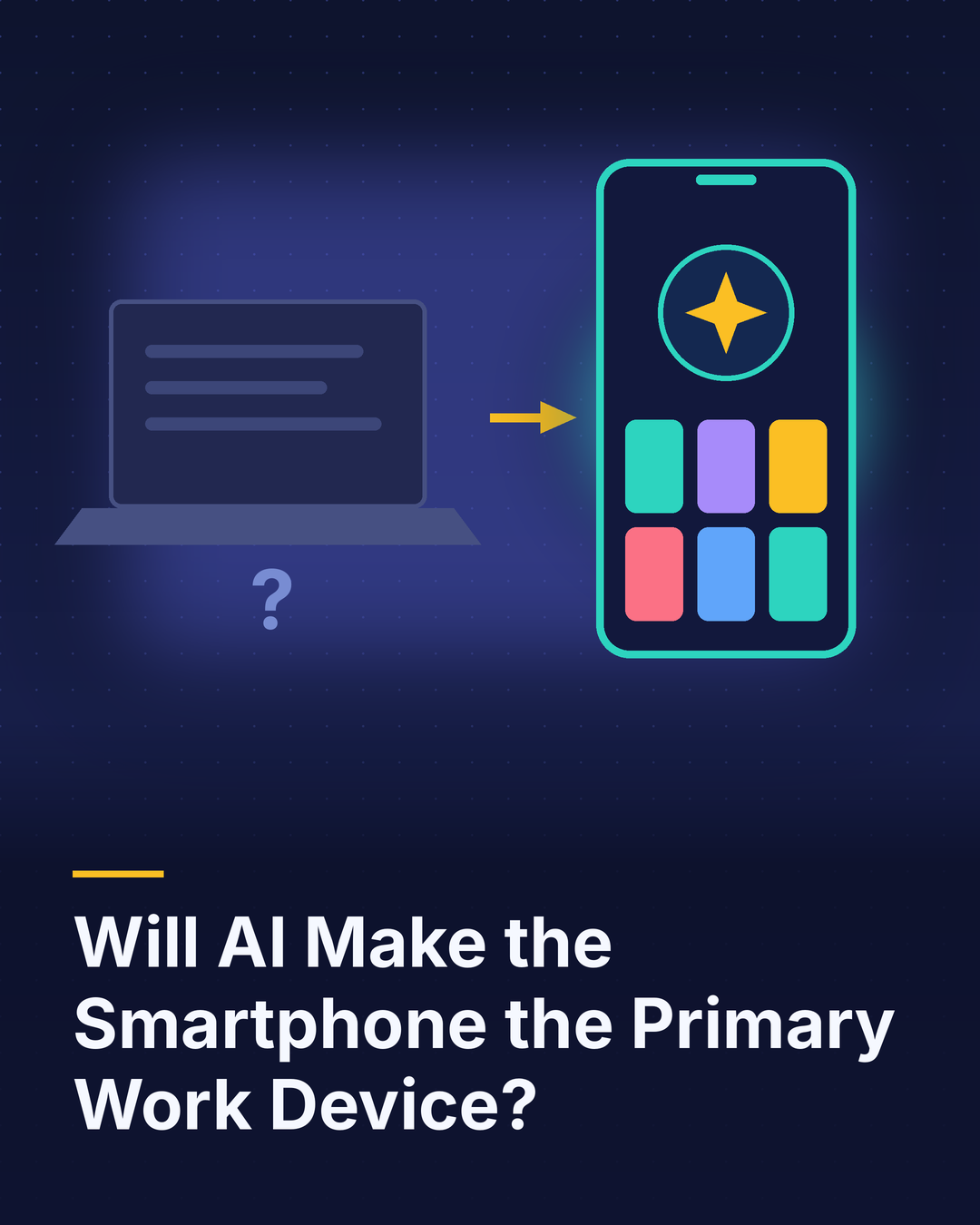
For most office workers, the laptop has been the center of the workday for two decades. Phones handle email triage, calendar checks and the occasional call, but real work happens on a larger screen with a keyboard. That arrangement has felt permanent.
Artificial intelligence may be about to loosen it.
The case for the phone
The argument goes like this. Much of what makes the laptop necessary is input and manipulation: typing long documents, building spreadsheets, editing presentations, navigating complex software. AI changes the nature of that work. When you can describe what you want and have an assistant draft the email, summarize the report, fill in the form or pull the numbers, the need for a full keyboard and large screen shrinks.
Voice becomes a practical interface. Instead of opening four apps to prepare for a meeting, a user asks the phone to brief them. Instead of typing notes after a call, the phone transcribes and summarizes automatically. Many of these capabilities now run directly on the device, which makes them fast and usable even with a weak connection.
At the same time, phones have become extraordinarily powerful. Many can connect to external monitors, keyboards and mice, turning into a desktop-style workstation when docked. Add always-on 5G connectivity, and the phone becomes the one device that’s always with you, always connected and increasingly capable.
For frontline and field workers, this shift has already happened. Their phone is their computer. AI simply makes it a better one.
The case against
Skeptics have good points. Some work genuinely needs a big screen: detailed financial modeling, design, software development, long-form writing and reviewing complex documents side by side. AI can draft, but people still need to review, edit and refine, and that is easier with more screen space.
There are practical concerns too. Battery life, ergonomics and the fatigue of staring at a small display for eight hours all matter. And many enterprise applications still aren’t designed for mobile.
The likely outcome
The most realistic future isn’t the phone replacing the laptop. It’s the phone becoming the hub of the workday, while larger screens become one way to view and work with what the phone and the cloud already know. Quick decisions, communications, approvals and information lookups shift steadily to the phone. Deep, focused work stays on bigger screens, often with AI doing more of the heavy lifting.
For some roles, especially those spent moving between locations, the phone may well become the only device needed.
What this means for IT leaders
Plan for mobile as a first-class work platform. Prioritize devices with strong on-device AI, long software support and robust security. Make sure core business applications work well on mobile, invest in reliable connectivity and manage phones with the same rigor as laptops.
The bottom line
AI is shifting more of the workday onto the smartphone, even if the laptop isn’t going away. The organizations that benefit most will treat the phone as a central work tool rather than an accessory. That means choosing devices, networks and applications with mobile productivity in mind. The question isn’t whether the phone becomes more important to work, but how quickly each organization adapts to it.